
What is a parcel sortation center?
A facility where parcels are sorted by destination and moved onto outbound vehicles without being stored. This page covers the flow, the automation decision and the questions to answer before you invest.
-
1Vehicle check-in
The linehaul truck docks; the vehicle and its manifest are opened in the system.
-
2Unloading
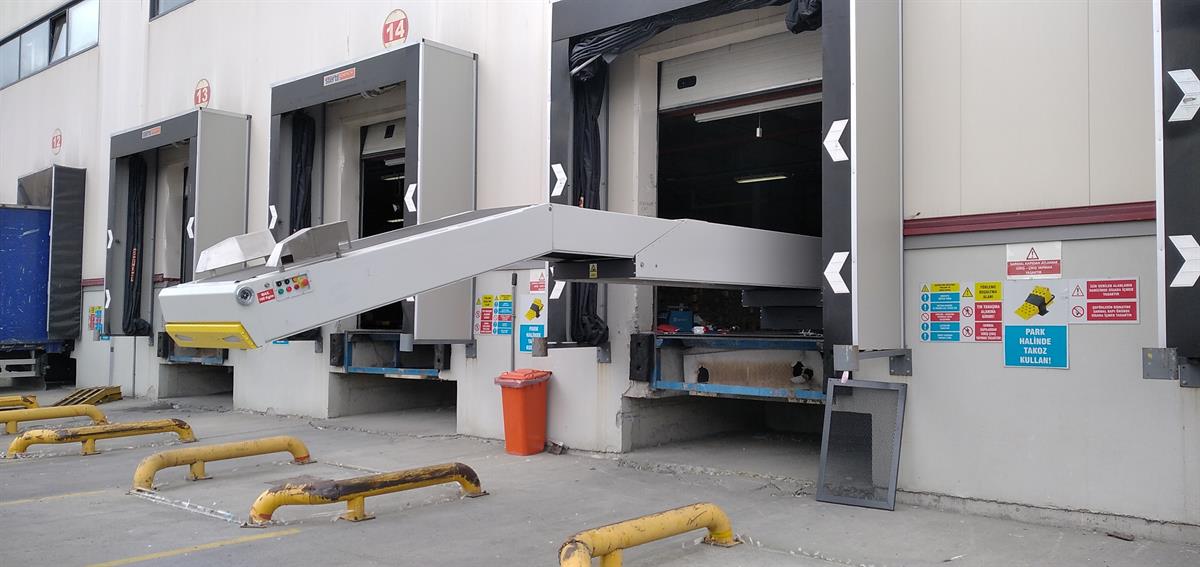
A telescopic conveyor extends into the vehicle and parcels are placed on the belt.
Telescopic Conveyors -
3Induction
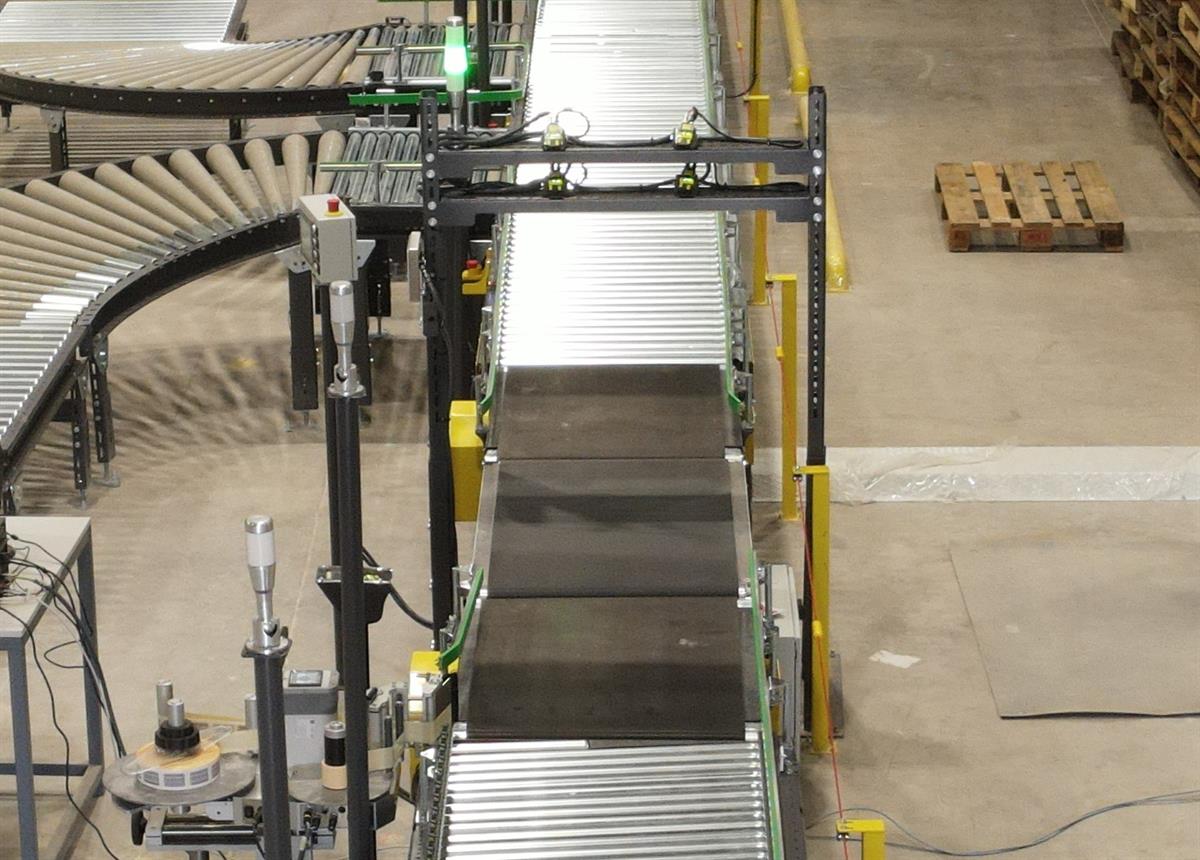
Parcels are singulated, gapped and inducted onto the sorter.
Conveyor Systems -
4DWS
Dimensions, weight and barcode are captured without stopping the flow.
DWS Systems -
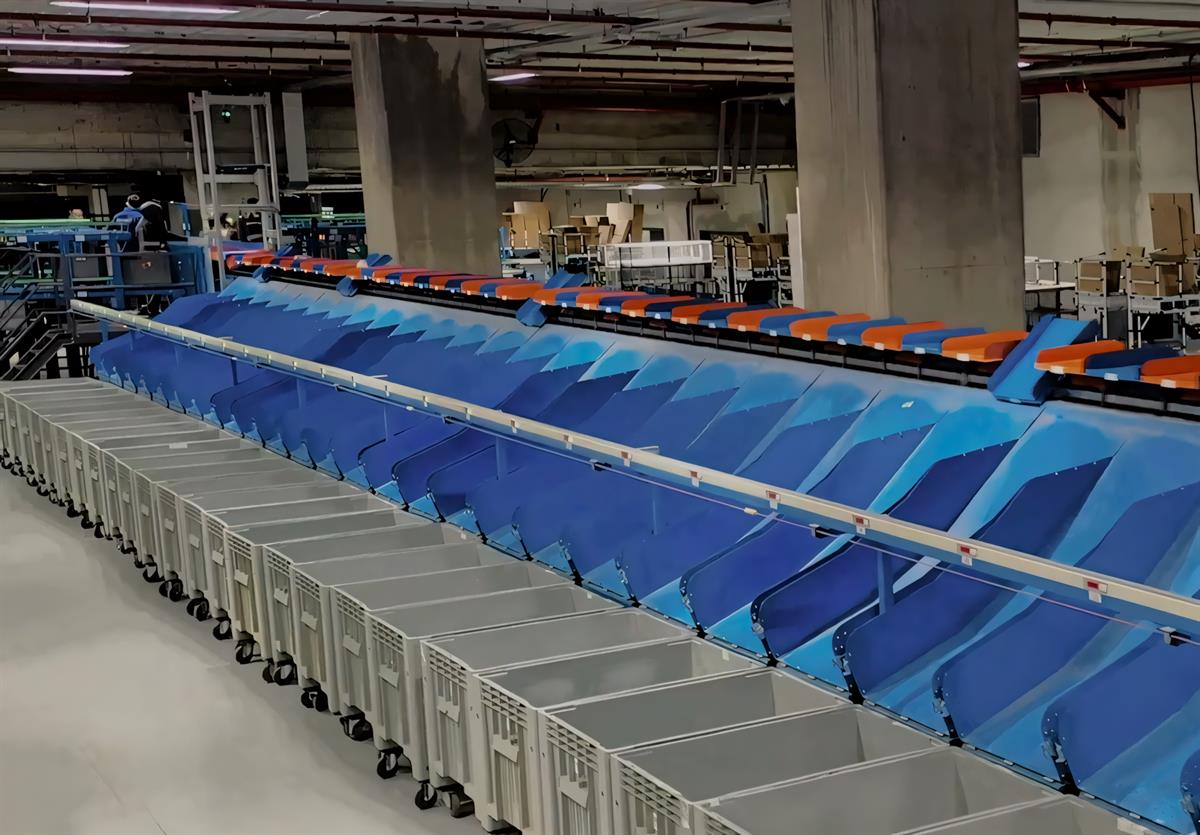
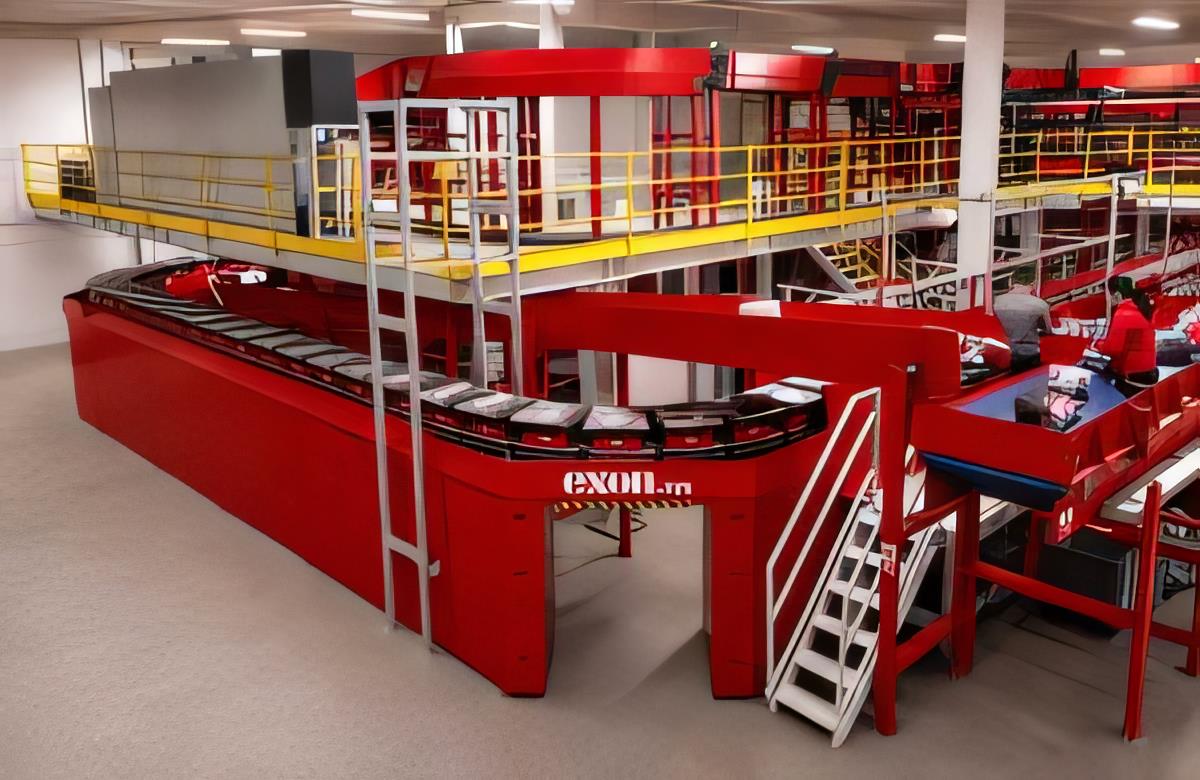
5Sorting
The sorter diverts each parcel to the chute for its destination.
Sortation Systems -
6Chute / bagging
Parcels go into bags, cages or onto a takeaway conveyor.
-
7Loading
Bags and cartons are loaded onto the outbound vehicle with a telescopic conveyor.
Telescopic Conveyors
Process flow. Yellow tags show the Exon system used in that step.
Definition
A parcel sortation center (parcel hub) is a facility where parcels change vehicles without being stored. Parcels arrive from local depots and from other hubs. They are unloaded and sorted by destination. Then they are reloaded onto linehaul or delivery vehicles. As volume grows, this work can no longer be done by hand. Unloading, measuring, sorting and loading are then designed as one automated line.
Other names: parcel hub, sortation center, sort center, courier hub, transfer hub.
The parcel mix in most networks is clear. Small, light parcels and polybags dominate, not heavy cartons. Most intercity parcels pass through both an origin hub and a destination hub. The line should be designed for this mix.
Flow inside the facility: 7 steps
- Vehicle check-in: The linehaul truck docks. The vehicle and its parcel manifest are opened in the system.
- Unloading: A telescopic conveyor extends into the vehicle. Parcels are placed on the belt at the stack face and move onto the conveyor line. (Telescopic Conveyors)
- Induction: Parcels are singulated and gapped. Then they are inducted onto the sorter in a controlled way. (Conveyor Systems)
- DWS: Dimensions, weight and barcode are captured without stopping the flow. Dimensional weight data goes to the operator's software. (DWS Systems)
- Sorting: The sorter diverts each parcel to the chute for its destination depot or linehaul route. A no-read parcel goes to the reject chute or recirculates on the sorter. (Sortation Systems)
- Chute / bagging: At the chute, parcels go into bags or cages, or straight onto a takeaway conveyor. Small parcels are often bagged.
- Loading: Bags and cartons are loaded onto the outbound vehicle with a telescopic conveyor. (Telescopic Conveyors)
When do you need automation?
- Trucks wait at the dock: In overnight sorting, linehaul departure times are fixed. If peak-hour volume cannot be sorted by hand, the problem is more than a delay. Parcels miss their trip.
- The number of destinations has grown: In manual sorting, an operator picks one of dozens of destinations for every parcel. More depots and routes mean more errors and more walking. On a sorter, the number of chutes is planned with line length and layout.
- Peak season runs on temporary staff: Volume can jump within a few weeks during sales events and the holiday season. Sort accuracy is hard to keep with staff doing the job for the first time.
- Declared dimensional weight cannot be checked: Manual measurement is not possible at high volume. The gap between declared and actual dimensional weight can mean lost revenue.
Which systems are used?
- Telescopic ConveyorsUnloading and loading vehiclesView →
- DWS SystemsDimensions, weight and barcodeView →
- Sortation SystemsSorting by destinationView →
- Conveyor SystemsTransport between lines and the sorter induction lineView →
7 questions to answer before you automate
Agree on the answers to these seven questions with your team before you request a quote. The right system and the right price follow from them.
- Space and layout: What are the column spacing, clear height, number of docks and dock positions? The building can decide the sorter type and whether a linear or loop layout fits.
- Peak hour or average? Size for peak-hour volume plus growth, not the daily average. How many trucks must be unloaded in how many minutes during the overnight window?
- Item mix: What share are cartons, polybags, flats and irregulars (tires, rolls, long parcels)? Items that cannot travel on a belt need a separate flow.
- Number of chutes: Add reject, returns and manual-handling chutes to today's destinations. Plan for the depots and routes you will open in the coming years.
- Building constraints: Is the building leased? What are the floor load capacity, fire compartments and existing equipment that stays? If space is short, is a mezzanine an option?
- Integration: How will barcode-to-destination mapping, dimensional weight data and load lists be shared with your parcel software or warehouse management system (WMS)? Agree on message formats in writing before the equipment arrives.
- Phased commissioning: Which line opens first without stopping operations? How will sorting continue during the transition? Will installation finish before peak season? Are site tests and operator training on the schedule?
Common mistakes
- Sizing for average volume. Choose the system for peak-hour volume plus growth, not the average. A line sized for the average can build queues in its first sales peak.
- Taking theoretical capacity for real capacity. Ask whether the quoted throughput is machine, system or operational throughput. On site, induction, read and chute-clearing losses add up. Operational throughput is usually well below machine throughput.
- Looking for the bottleneck only at the sorter. Jams usually start at the induction line, at merge points and at chutes that are not cleared. A fast sorter does not speed up a slow induction.
- Ignoring polybags and small parcels. Polybags are the most common type among missorted items. A system chosen for cartons can struggle with polybags.
- Leaving training, maintenance and integration to the end. Throughput needs can be defined wrongly. Supplier recommendations may not be followed. Training and maintenance may fall outside the contract. Then the full installed throughput may not be used. Read errors pile parcels into manual handling. Finalize the integration specification before delivery.
Exon references
Exon's references in the parcel sector include hepsiJET and Aras Kargo, including the Aras Kargo Ankara parcel hub.
Frequently asked questions
Are a parcel hub and a sortation center the same thing?
Yes. Both names describe a facility where parcels are sorted and moved onto other vehicles. "Parcel hub" is common in Europe. "Sortation center" or "sort center" is common in the US.
How is a sortation center different from a warehouse?
Parcels are not stored in a sortation center. They pass from the inbound to the outbound vehicle quickly, usually within the same shift. A warehouse or distribution center stores goods, then picks and packs them per order. That is why flow throughput, not racking, decides the design of a sortation center.
What happens to a parcel in a sortation center?
The parcel is unloaded and its barcode is read. Its dimensions and weight are measured. It is sorted to the chute for its destination depot and loaded onto the vehicle going there. On an automated line, nobody carries the parcel between these steps.
Can a running sortation center be automated?
Yes, usually in phases. The new line is installed section by section. During the transition, part of the flow is still sorted by hand. Each section goes live after testing. The plan should finish before peak season.
What determines sorter throughput in a sortation center?
There is no fixed number. Peak-hour volume, item mix, number of chutes, number of induction points and layout are assessed together. Throughput depends on the sorter type and the project.
Related terms
Last updated: