
What is a loading dock?
The loading and unloading point that bridges the warehouse floor and the truck bed. This page explains dock equipment, dock planning and the flow of loose cartons.
-
1Truck arrival
The truck backs onto the dock and is secured; the door and seal close.
-
2Leveling
The dock leveler bridges the gap between the floor and the truck bed.
-
3Unloading
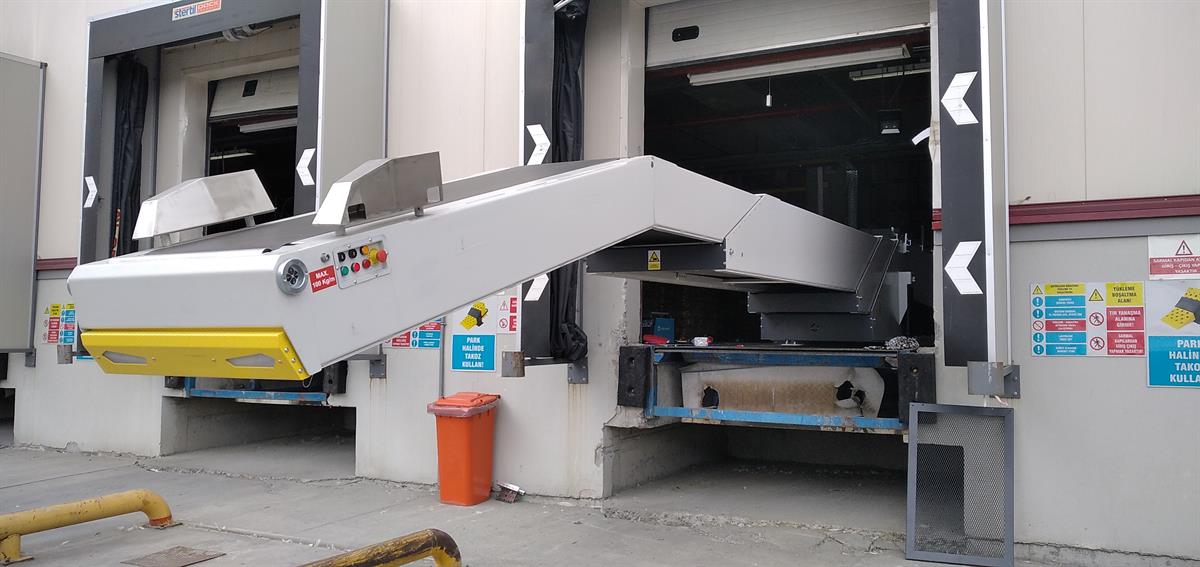
The telescopic conveyor extends into the truck and cartons go onto the belt.
Telescopic Conveyors -
4Transfer to the line
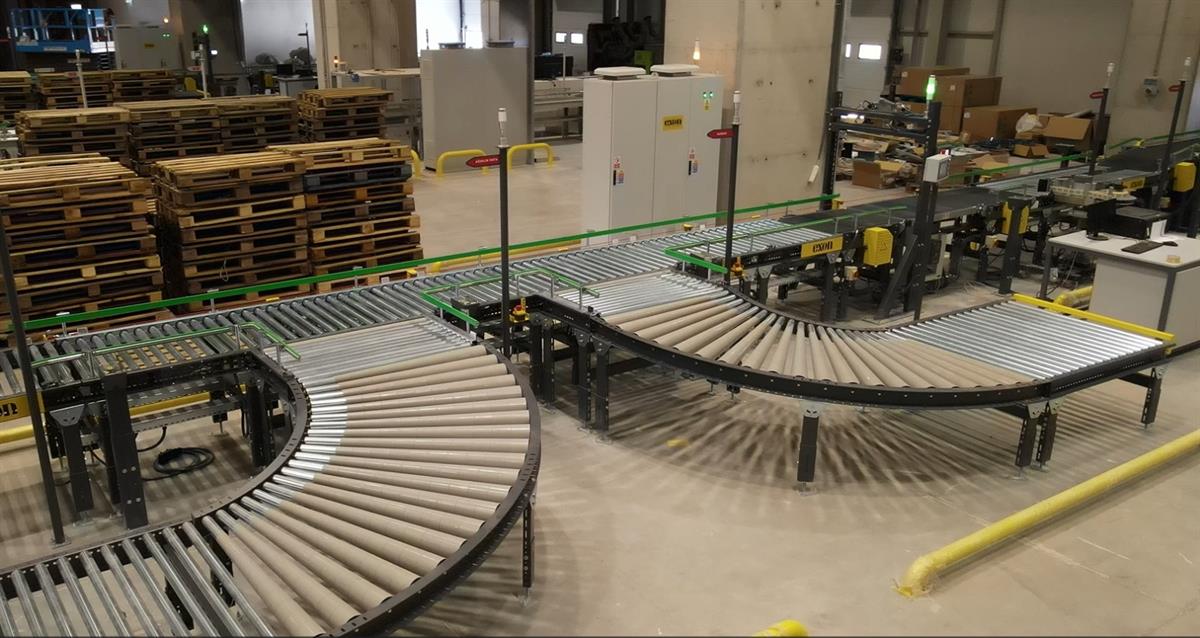
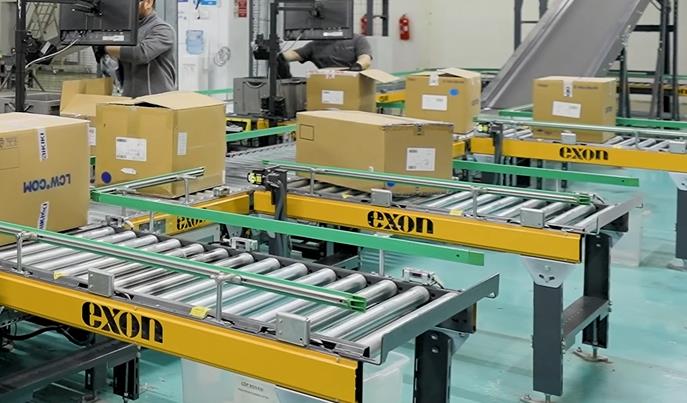
Cartons flow from the dock into the facility on the conveyor line.
Conveyor Systems -
5Loading
Outbound cartons are loaded with a telescopic conveyor at the same or another dock.
Telescopic Conveyors
Process flow. Yellow tags show the Exon system used in that step.
Definition
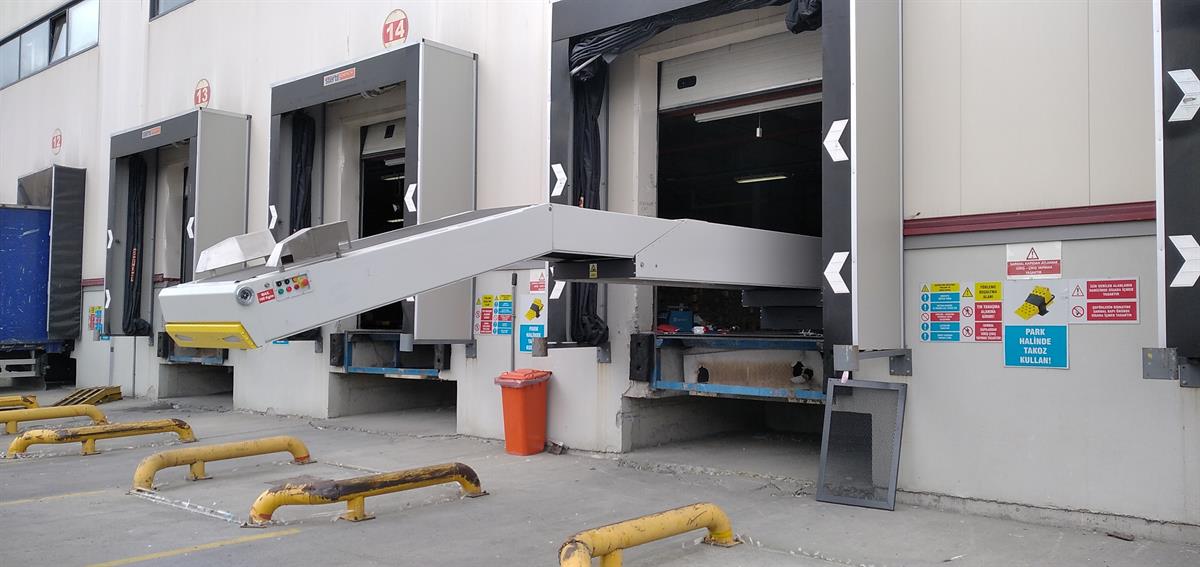
A loading dock is the point where loading and unloading take place. It bridges the height difference between the warehouse floor and a truck, trailer or container bed. The dock works with a dock door, a dock leveler, a dock seal or shelter and bumpers. Palletized loads move by forklift or pallet jack. For loose cartons, a telescopic conveyor extends into the truck and cuts manual carrying.
Other names: dock, loading bay, dock door, truck dock.
Flow at the dock: 5 steps
- Truck arrival: The truck backs onto the dock and is secured. The dock door opens. The seal closes the gap around the truck body.
- Leveling: The dock leveler bridges the height difference and the gap between the floor and the truck bed.
- Unloading: Palletized loads come off by forklift. For loose cartons, the telescopic conveyor extends into the truck. The operator places cartons on the belt at the stack. (Telescopic Conveyors)
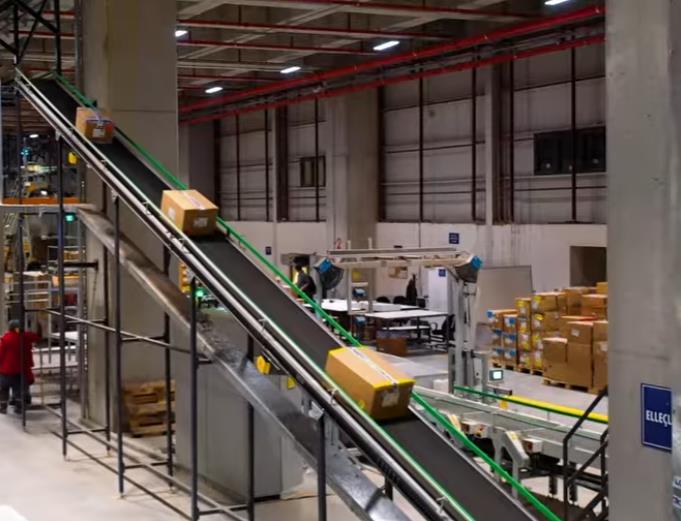
- Transfer to the line: Cartons flow from the dock into the facility on the conveyor line. They go to receiving, storage or sortation. (Conveyor Systems)
- Loading: Outbound cartons are loaded with a telescopic conveyor at the same or another dock. The belt runs in both directions. So the same unit can both unload and load. (Telescopic Conveyors)
What equipment is at a loading dock?
| Equipment | Function |
|---|---|
| Dock door (sectional door) | Separates the dock from the outside |
| Dock leveler | Bridges the floor-to-truck height difference; hydraulic or mechanical |
| Dock seal or shelter | Closes the gap between truck and building; reduces heat loss and dust |
| Dock bumper | Keeps the truck from hitting the building |
| Wheel chock / vehicle restraint | Keeps the truck from moving during loading |
| Telescopic conveyor | Moves loose cartons from inside the truck to the line, and from the line into the truck |
Dock equipment is chosen on the building and construction side. The telescopic conveyor is engineered separately. Dock height, vehicle types and carton mix drive that choice.
How many docks do you need?
The dock count comes from two values. One is the number of trucks arriving in the peak hour. The other is how long each truck stays at the dock. Four factors set the dwell time:
- Load type: A palletized truck unloads quickly. A floor-loaded truck takes much longer if unloaded by hand.
- Vehicle type: Vans, rigid trucks, trailers and containers differ in depth and height. In containers and long trailers, the operator walks farther.
- Unloading method: A telescopic conveyor extends into the truck. The operator does not carry cartons, only places them on the belt.
- Inbound and outbound split: If inbound and outbound docks are separate, size each one on its own. If one dock serves both directions, plan it by the hour.
Adding docks means changing the building. In an existing building, first look at cutting dwell time at the dock.
When do loose cartons need a telescopic conveyor?
- Trucks arrive or leave with loose cartons, not pallets,
- Trucks wait at the dock and miss departure times,
- Operators carry heavy cartons inside the truck,
- Dock count cannot grow but volume does.
Common mistakes
- Sizing docks for the average truck count. Trucks arriving together in the peak hour won't fit. They wait in the yard.
- Choosing dock height without vehicle types. Van and trailer beds are not at the same height. The gap a leveler can bridge is limited.
- Keeping the area behind the dock too small. If unloaded goods have nowhere to wait, the dock cannot take the next truck. Plan the buffer area behind the dock and the conveyor line together.
- Thinking of the telescopic conveyor last. The conveyor is chosen to fit dock height, door width and the line behind it. Reserve space for it at the building design stage.
Related Exon systems
- Telescopic Conveyors: loading and unloading loose cartons at the dock; works standalone or connected to a conveyor line
- Conveyor Systems, Belt Conveyor, Roller Conveyor: flow from the dock into the facility
Exon designs, manufactures and commissions its telescopic conveyors in-house. They are in use at many facilities, including LC Waikiki, Eren Holding and hepsiJET. Exon telescopic conveyors comply with EN 619.
Frequently asked questions
What types of loading docks are there?
Common types are flush docks built into the building, external docks in front of the building and mobile yard ramps. A yard ramp gives access from ground level to the truck. On fixed docks, a dock leveler bridges the height difference. The leveler is usually hydraulic or mechanical.
What is a hydraulic dock leveler?
It is a platform adjusted by a hydraulic cylinder. It bridges the height difference between the floor and the truck bed. A lip at the end of the platform rests on the truck bed.
How can loose cartons be unloaded quickly at the dock?
A telescopic conveyor extends into the truck. The operator places cartons on the belt at the stack. Cartons flow straight onto the conveyor line inside the facility. Since the operator does not carry cartons, unloading takes less time.
Can the same dock be used for both loading and unloading?
Yes. The telescopic conveyor belt runs in both directions. With an hourly plan, the same dock can serve inbound and outbound trucks.
Related terms
Related Exon systems
Last updated: