
What is cross-docking?
A shipping method where inbound goods are sorted and moved to outbound trucks without being stored. This page explains the flow and the two main models. It also shows when cross-docking pays off.
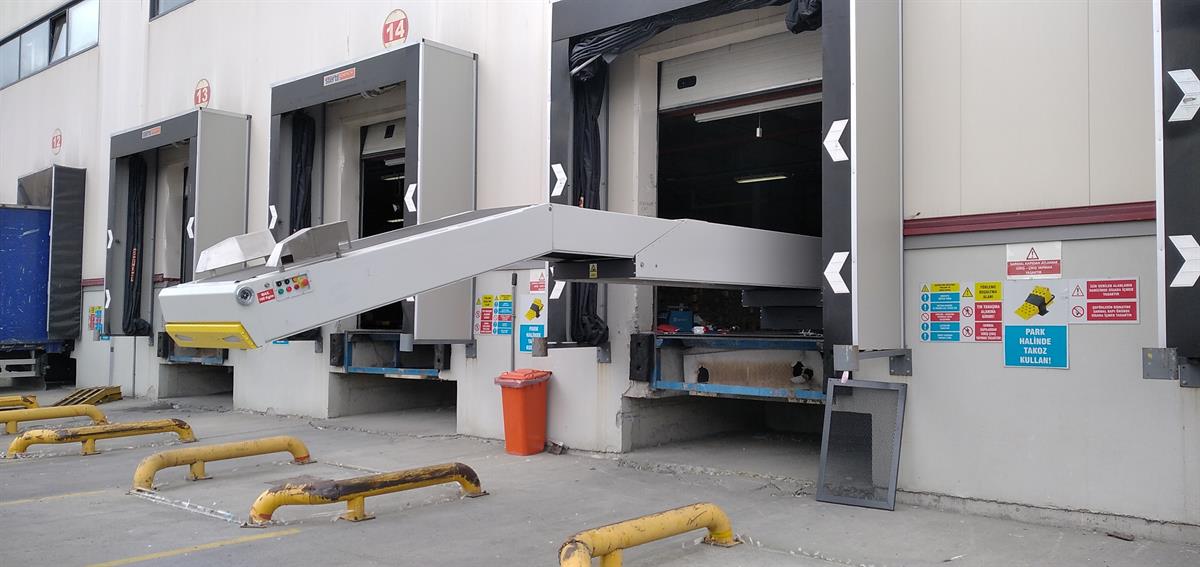
- 1Truck arrival and unloading Telescopic Conveyors
- 2Scanning and check-in DWS Systems
- 3Sortation Sortation Systems
- 4Consolidation and staging Conveyor Systems
- 5Loading Telescopic Conveyors
Process flow. Yellow tags show the Exon system used in that step.
Definition
Cross-docking is a shipping method where inbound goods move to outbound trucks without going into storage. Goods are unloaded and sorted by destination. They are loaded onto outbound trucks within a short time. Nothing is stored; goods only pass through. Putaway and picking steps disappear. Facility capacity therefore depends on dock count, sortation speed and the truck schedule.
Other names: cross-dock, dock-to-dock shipping, flow-through distribution.
A parcel sortation center is one of the best-known examples of cross-docking. Parcels arrive from local depots and are sorted by destination region. The same night they move onto linehaul trucks. Retail uses a similar flow. Cartons from suppliers are sorted by store. They are loaded onto store trucks the same day.
Flow inside the facility: 5 steps
- Truck arrival and unloading: The inbound truck is assigned to a receiving dock. A telescopic conveyor unloads cartons straight onto the line. (Telescopic Conveyors)
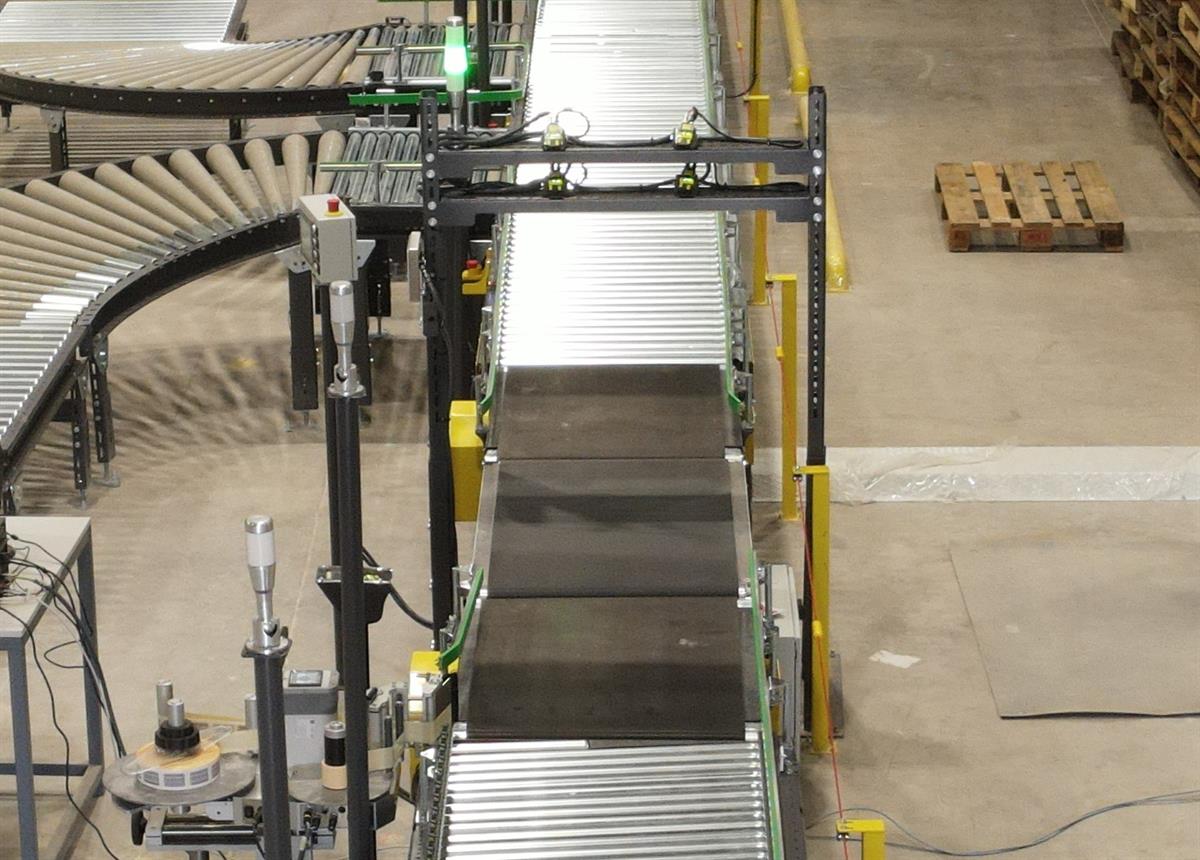
- Scanning and check-in: The barcode is scanned and matched to the advance shipping notice (ASN). In parcel flows, dimensions and weight are also measured. (DWS Systems)
- Sortation: Each carton goes to the chute for its destination. A destination can be a store, depot, route or customer. (Sortation Systems)
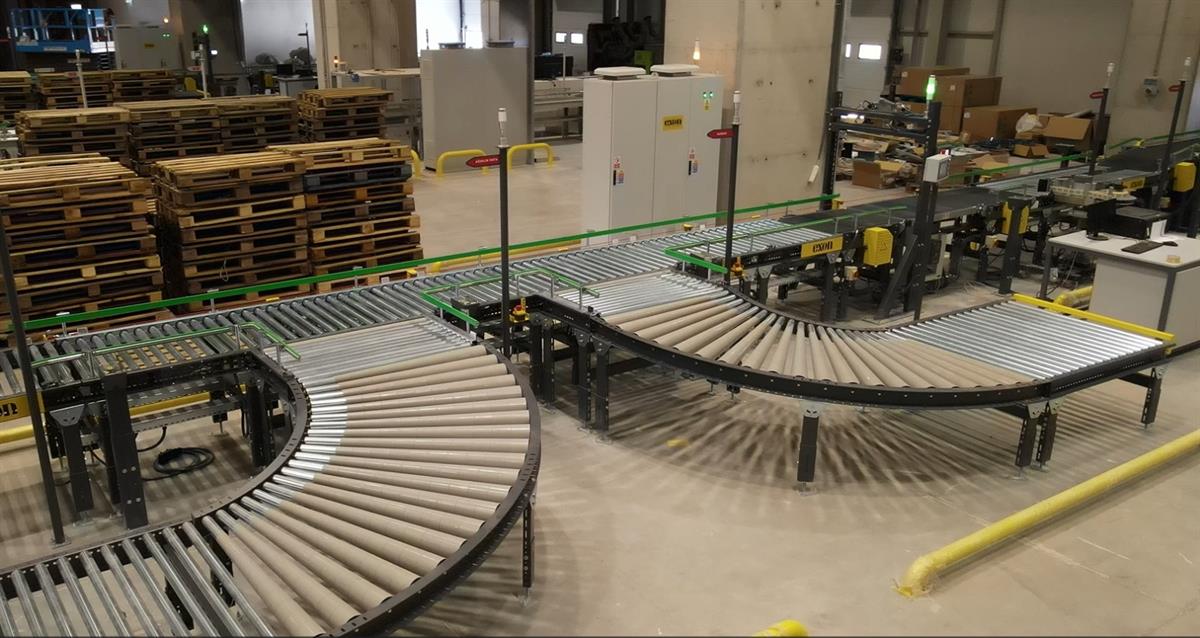
- Consolidation and staging: Cartons for the same destination are gathered at the chute. They are palletized or bagged if needed. A buffer conveyor holds them for short waits. (Conveyor Systems)
- Loading: The ready load goes from the shipping dock onto the outbound truck. (Telescopic Conveyors)
Two main models
| Pre-distribution | Post-distribution | |
|---|---|---|
| When is the destination known? | Before goods leave the supplier | After goods arrive at the facility |
| How do cartons arrive? | Prepared and labeled per store or customer | In bulk; split at the facility |
| Work at the facility | Scanning, sortation, loading | Scanning, splitting, repacking if needed, sortation, loading |
| Data needed | Usually an advance shipping notice | Current demand and the store allocation plan |
| Typical use | Parcel, supplier-to-store flows | Retail distribution centers, seasonal allocation |
When does cross-docking fit?
- Goods turn fast: If goods ship the same or next day, putaway is unnecessary. Storing and picking again doubles the labor.
- Destinations and truck schedules are known in advance: Inbound and outbound truck times must match. If they don't, goods pile up at the dock.
- Data is reliable: Barcodes, shipping notices and destination matching must be accurate. Then sortation needs no human decision.
- Volume is high: At low volume, manual sorting is enough. As destinations and volume grow, a sorter is needed.
In some cases conventional storage is the safer choice. These are slow movers, uncertain demand and irregular supplier deliveries. Many facilities run both. Fast movers flow through cross-docking; the rest go through storage.
Related Exon systems
- Telescopic ConveyorsTruck unloading and loading of loose cartonsView →
- Sortation SystemsSortation by destinationView →
- Conveyor SystemsDock-to-dock transport, merge and buffer linesView →
- DWS SystemsDimensions, weight and barcode without stopping the flowView →
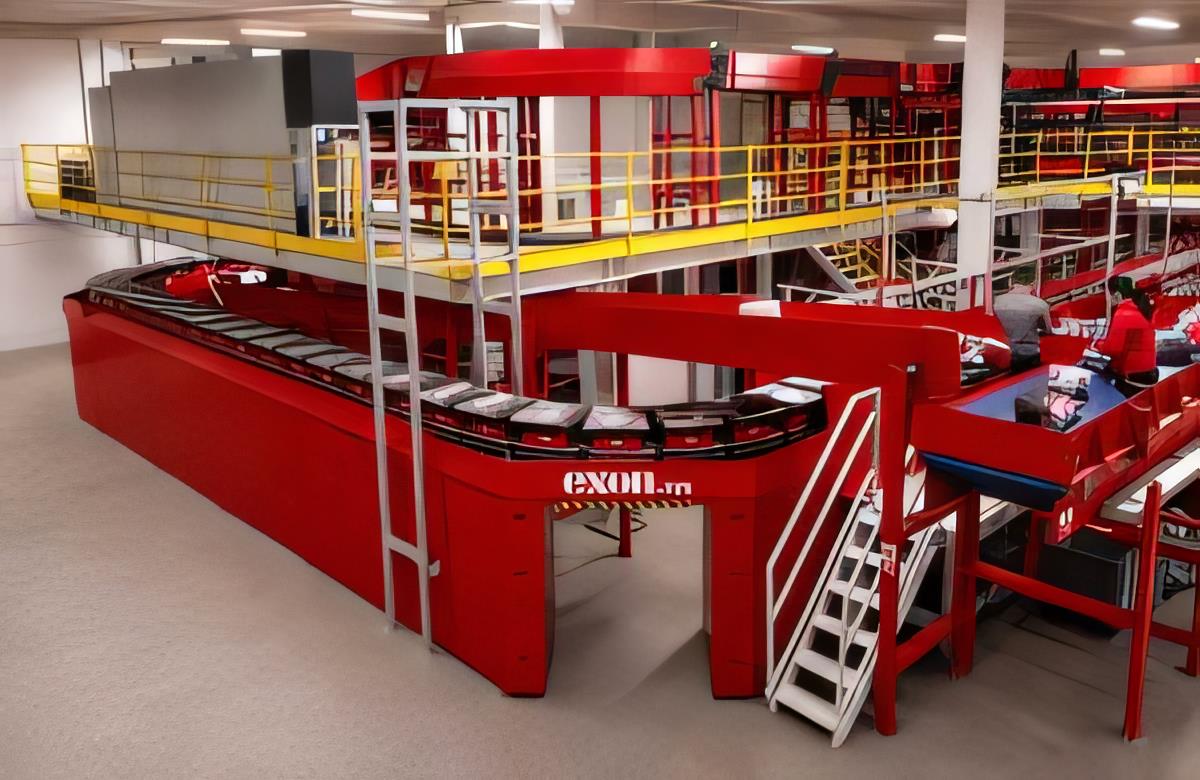
For the parcel application: What is a parcel sortation center?
Checklist for planning a cross-docking facility
- Dock count and layout: Are receiving and shipping docks on opposite sides or the same side? The layout sets line length and sorter layout.
- Truck schedule: How much do inbound and outbound truck times overlap? Which is the peak hour?
- Number of chutes: Are there enough chutes for today's destinations? Is there room for reject, manual and new destinations?
- Buffer area: Where will the load wait if an outbound truck is late?
- Data flow: Which software sends the shipping notice, barcode and destination match? In what format?
- Item mix: What share are cartons, polybags, irregular items and pallets? Is there a separate flow for items the belt cannot carry?
Common mistakes
- Leaving the truck schedule out of the design. Cross-docking is as much a timing project as an equipment project. If inbound and outbound trucks don't match, the facility turns into a warehouse.
- No buffer area. One late truck can fill every chute.
- Building without a reliable shipping notice. If the notice is missing or wrong, every carton becomes manual work.
- Ignoring no-reads. Damaged or unlabeled cartons need a separate chute and a manual handling area.
Frequently asked questions
What does cross-docking mean?
Goods enter at one dock and leave at the opposite dock without being stored. They move from the inbound truck to the outbound truck within a short time.
What is the difference between cross-docking and storage?
In storage, goods are put away on racks and picked again per order. In cross-docking, goods move to the outbound truck within a short time. This is usually the same day or the same shift. Flow capacity matters more than racking.
Does cross-docking require a sorter?
No. With few destinations and low volume, cartons can be sorted by hand. Simple conveyor lines can be enough. As destinations and volume grow, manual errors and time increase. That is the point where a sorter comes in.
Which industries use cross-docking?
It is common in parcel and courier, retail, food and e-commerce. Third-party logistics (3PL) providers also use it.
Related terms
Last updated: