
What is dimensional weight?
The volume-based weight carriers use to bill a parcel. This page explains how it reaches the invoice, where declared and measured values drift apart, and how automated measurement closes the gap.
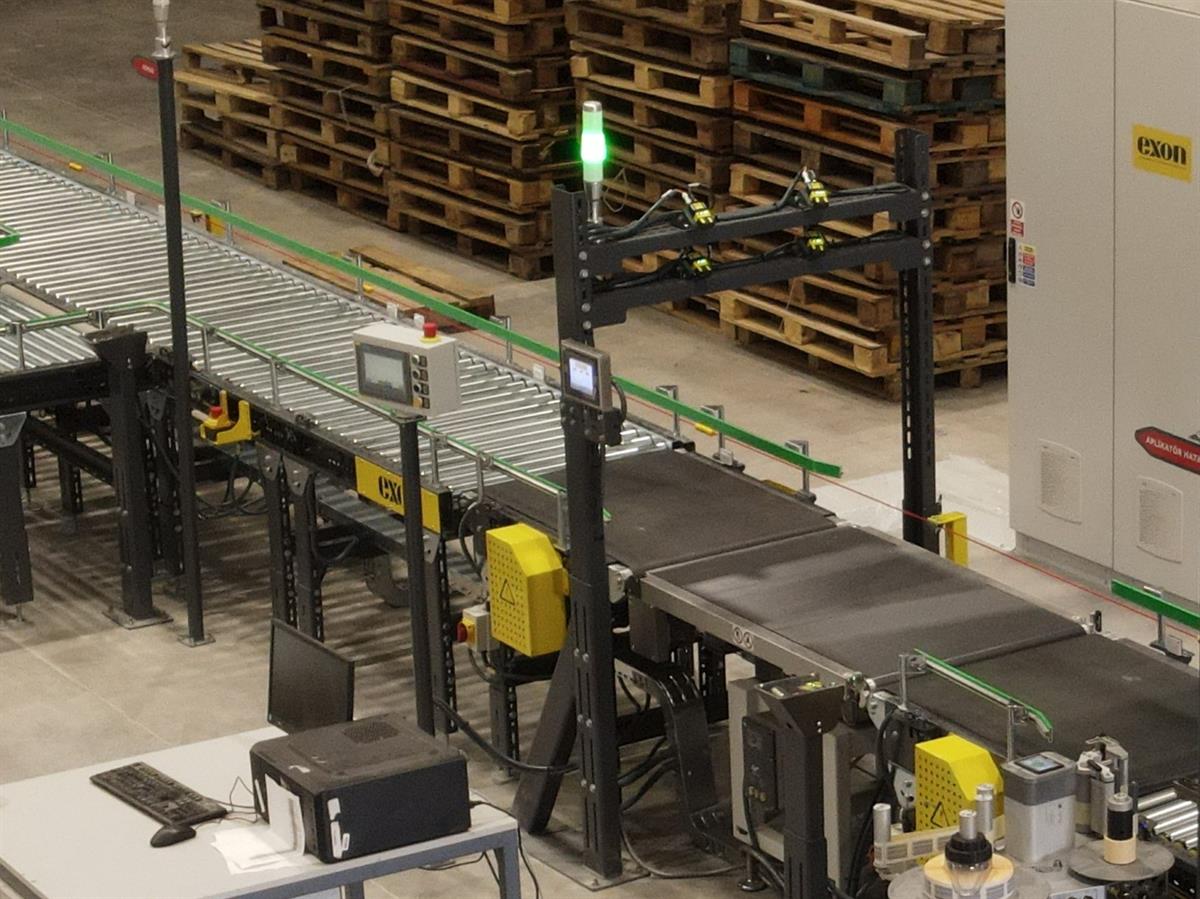
-
1Line flow
Parcels arrive at the measuring point on the conveyor with a gap between them.
Conveyor Systems -
2Dimensioning
Sensors measure length, width and height without stopping the flow.
DWS Systems -
3Weighing
An in-line scale records the actual weight.
DWS Systems -
4Scanning
The barcode read links the measurement to the shipment.
DWS Systems -
5Comparison
Measured dimensional weight is compared with the declared value and the gap is logged.
Exon control software business software -
6Sortation
The parcel goes to its destination chute; mismatches can be diverted to a separate chute.
Sortation Systems
Process flow. Yellow tags show the Exon system used in that step.
Definition
Dimensional weight is a parcel's weight calculated from its size. Multiply length, width and height in centimeters. Then divide by the carrier's divisor (dimensional factor). Carriers compare the actual weight with the dimensional weight and bill the higher one. This way a light but bulky parcel pays for the space it takes in the truck or aircraft.
Other names: volumetric weight, DIM weight, chargeable weight. In Türkiye the same value is called "desi". The system that measures it automatically is a DWS system (dimensioning, weighing and scanning).
Dimensional weight is not a tariff detail. For a carrier it is revenue. For a shipper it is a cost line.
How the invoice is built
The chargeable weight is the higher of actual weight and dimensional weight. Take a 3 kg carton of 40 × 30 × 30 cm. With a divisor of 5,000 it weighs 7.2 kg dimensionally (36,000 ÷ 5,000). The invoice is based on 7.2 kg or more after rounding, not on 3 kg.
Three rules change the result from contract to contract:
- Divisor: International express services often use 5,000. Air freight commonly uses 6,000. Some services use 4,000. Domestic divisors vary by carrier and country. The smaller the divisor, the heavier the same carton bills. High-volume shippers can negotiate the divisor in their contract.
- Rounding: Fractions are usually rounded up, to the next whole unit or half unit. On small parcels rounding has a large relative effect.
- Measurement basis: Outer packaging dimensions count. Bulging cartons, protruding packaging and irregular items are measured at their outermost points.
Where declared and measured values drift apart
The shipper declares a dimensional weight. The carrier either measures the real parcel or does not. The gap usually comes from these sources:
- Weight calculated from product data: The e-commerce system derives it from catalog dimensions or a standard carton size. If the actual carton differs, the declaration is wrong.
- Overfilled or hand-sealed cartons: An overfilled carton measures larger than its nominal size. A polybag changes shape with its contents.
- Multi-piece shipments: The piece count or total size is entered incompletely.
- Unmeasured flow: Manual measuring with a tape is not possible at high volume. Every unmeasured parcel is billed on its declaration.
For a carrier, under-declaration means volume moved but not billed. That is lost revenue. For a shipper it means later adjustment invoices and disputes. Both sides end up with the same need: every parcel's measurement on record, with evidence.
How automated measurement closes the gap
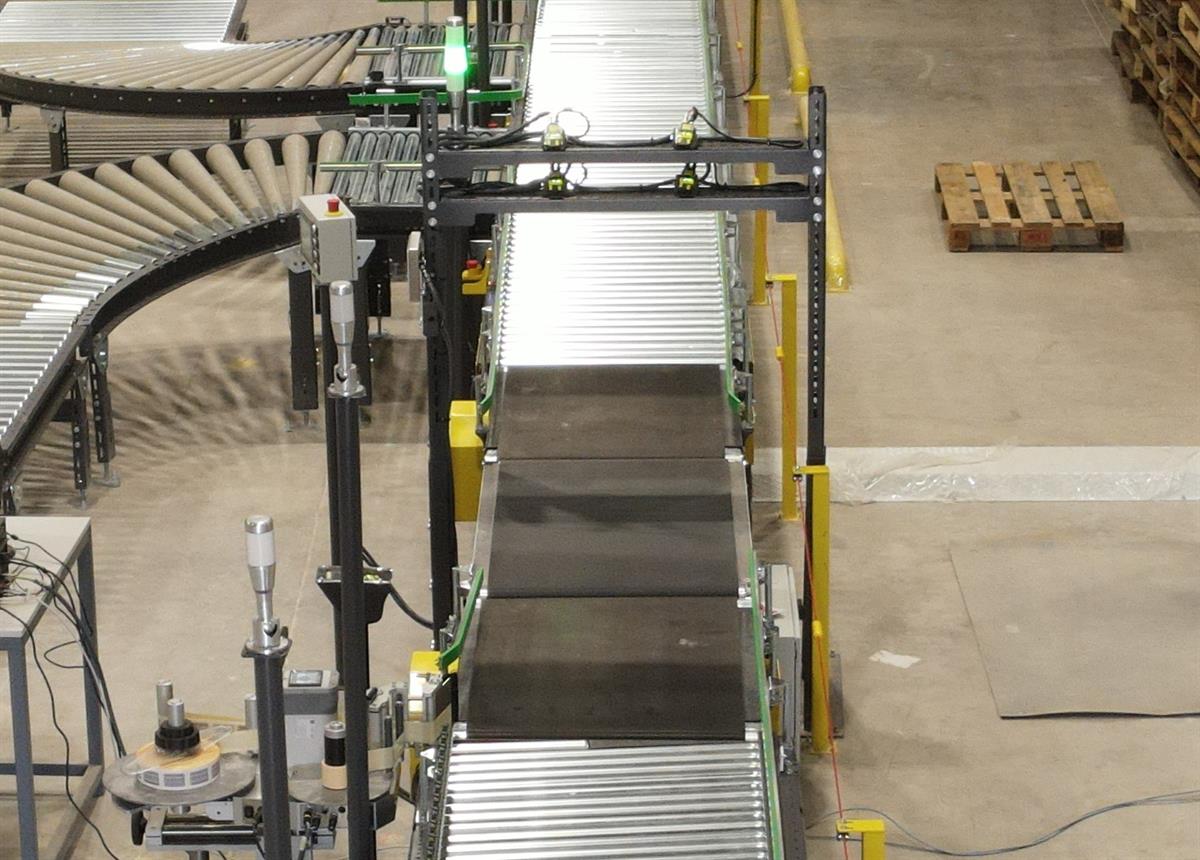
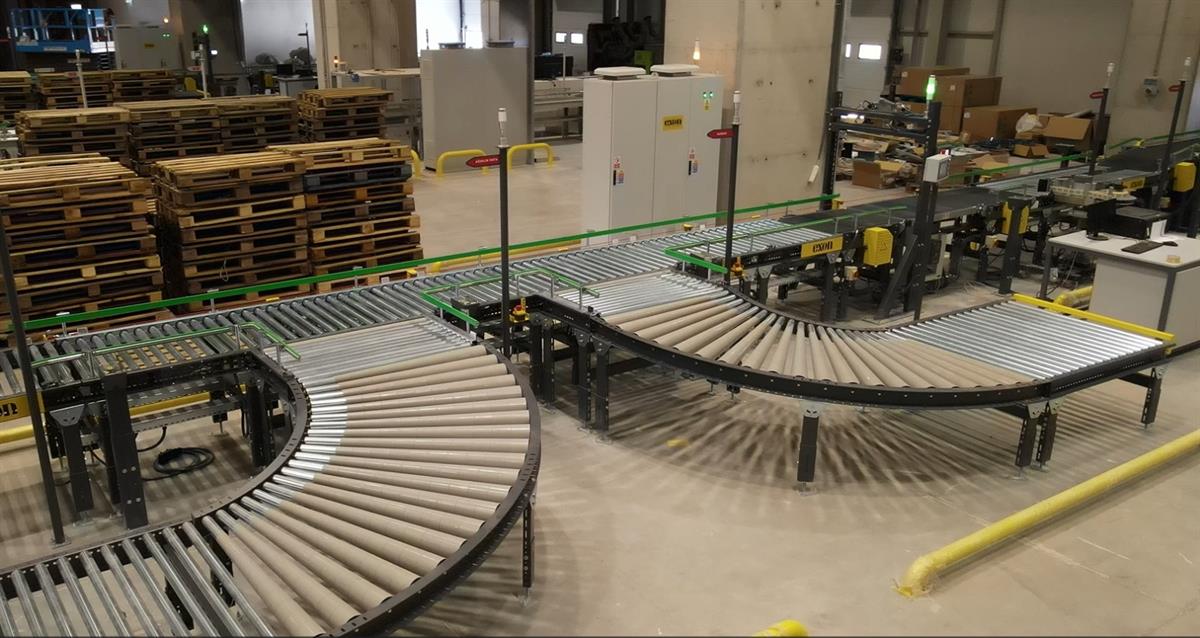
- Line flow: Parcels arrive at the measuring point on the conveyor with a gap between them. (Conveyor Systems)
- Dimensioning: Sensors measure length, width and height without stopping the flow. (DWS Systems)
- Weighing: An in-line scale records the actual weight.
- Scanning: The barcode read links the measurement to the shipment.
- Comparison: The measured value is compared with the declaration. The gap is logged per shipment. The record goes to the billing software.
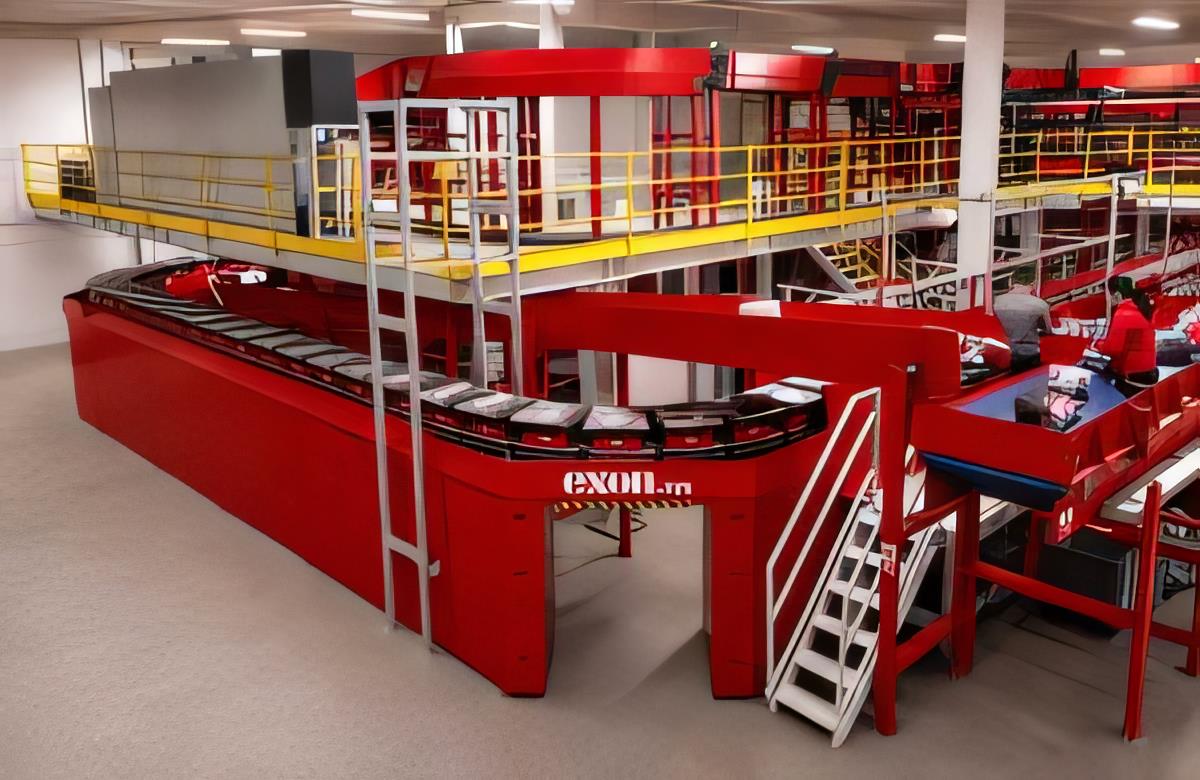
- Sortation: The parcel goes to its destination chute. Parcels that do not match their declaration can be diverted to a separate chute for checking. (Sortation Systems)
Measurement can sit on the sorter induction line the parcel already passes. Then no separate station or extra handling is needed. In a parcel hub, measurement covers the entire flow. In an e-commerce warehouse, the correct value is produced at the packing exit before it is declared.
6 criteria for choosing a DWS system
- Item mix: The share of cartons, polybags, envelopes and irregular items matters. Polybags and transparent packaging challenge the measuring method. Test with sample parcels.
- Line speed and gap: The system must measure the peak-hour flow. It must still measure each parcel separately as gaps shrink.
- Measuring range: What sizes will pass, from the smallest envelope to the largest carton? Define a separate flow for out-of-range items.
- Evidence record: In a dispute the measured value alone may not be enough. A parcel image and a time stamp help.
- Data link: In what format will the data go to the carrier software or the warehouse management system (WMS)? At what moment? Fix the message structure in writing before installation.
- Billing-grade measurement: Measurements can feed the invoice directly. Check the dispute process in customer contracts first.
Common mistakes
- Relying on sample checks. Measuring part of the flow by hand shows the gap but does not recover it. Unmeasured parcels are still billed on the declaration.
- Ignoring polybags. A measuring setup chosen for cartons can give wrong results on polybags.
- Not linking measurement to billing. Measurement data that never reaches the billing software is only a report.
- Not planning calibration. Weighing and dimensioning need regular checks. A measurement that cannot be verified will not stand in a dispute.
Frequently asked questions
How is dimensional weight calculated?
Multiply length × width × height in centimeters and divide by the carrier's divisor. International express often uses 5,000, air freight 6,000. Domestic services and individual contracts may use other divisors. The result is compared with the actual weight, and the higher one is billed.
Is dimensional weight the same as actual weight?
No. Actual weight is what the scale shows. Dimensional weight is a weight equivalent calculated from volume. The invoice uses the higher of the two.
What is a dimensional weight adjustment?
It is the difference between the shipper's declared value and the carrier's measured value. If the carrier measures more, the difference is charged to the shipper.
Why do carriers use different divisors?
The divisor shows how a carrier prices its truck or aircraft capacity. That pricing balances volume against weight. Road, international express and economy services work with different divisors. The divisor in your contract is the one that applies.
Can a DWS system be added to an existing conveyor?
Yes. A DWS system can be added to an existing conveyor line. It can also be installed together with new conveyors and a sorter. Exon offers both dynamic (in-line) and static (table-top) DWS systems. Exon designs and builds them in-house and writes the control software.
Related terms
Related Exon systems
Last updated: