
What is sorter and conveyor throughput?
The number of items a sorter, conveyor line or facility handles per unit of time. This page explains the levels throughput is measured at, why peak hour is the basis and how to read the figure in a quote.
In short
- Unit: items per hour. Parcel lines use parcels per hour. Retail warehouses use cartons per hour, and e-commerce warehouses use orders or order lines per hour. Figures with different units cannot be compared.
- Where it is measured: a single machine, a line or the facility. A facility's throughput is the throughput of its slowest link.
- Reference hour: the peak hour, not the average. Add a growth margin on top.
- No fixed value: Sorter type, item mix and layout set throughput. The number of induction points and chutes also affect it.
Definition
Throughput is the number of parcels, cartons or items that can be handled per unit of time. It is measured for a sorter, a conveyor line or a whole facility. In intralogistics it is usually given in items per hour. Investment decisions are not based on the average hour. The basis is the throughput you can sustain on site during the peak hour.
Other names: throughput rate, sortation rate, items per hour, units per hour (UPH), peak throughput, capacity.
Three levels: machine, system, operation
Quotes, brochures and sites use the same word for three different figures:
- Machine throughput: The sorter's theoretical upper limit. It is calculated from carrier pitch and line speed. It assumes every carrier is full and every barcode is read.
- System throughput: The value reached once induction lines, merge points, scanning and chutes come into play. Empty carriers and no-reads lower it. Recirculating parcels pull it down as well.
- Operational throughput: The value sustained on site during a real shift. It includes the real item mix, operator breaks, chute-clearing speed and downtime. Return on investment is calculated with this figure.
The gap between the three levels differs by project. So ask in writing which level the quoted figure describes.
Why is the peak hour decisive?
If a line is sized for the daily average, queues build at busy hours. In a parcel sortation center, the overnight sort window is fixed. A parcel not handled in that window misses its trip. In an e-commerce warehouse, sales events and the holiday season raise volume sharply in a short time.
Sizing usually follows this order:
- Find peak-hour volume from historical data.
- Calculate the ratio of peak hour to average hour.
- Add expected growth and design the line for that value.
Sometimes the peak lasts only a few weeks. Then an extra shift or a temporary manual area may cost less. Enlarging the whole line is not always the best option. This is a trade-off and should be compared with numbers before you invest.
What lowers throughput?
- Induction: If parcels are not inducted in a single file with even gaps, carriers pass empty (see Sorter induction).
- Scanning: A no-read barcode sends the parcel to the reject chute or makes it recirculate. Every recirculating parcel occupies space meant for a new parcel.
- Chutes: A chute that is not cleared in time fills up. Parcels for that destination keep going around the loop. The bottleneck is often not the sorter but induction and chutes.
- Item mix: Polybags, flats, very small or irregular items increase the pitch on some sorter types. Sometimes they need a separate flow.
- Downtime: Mean time between failures and mean time to repair (MTBF and MTTR) directly set operational throughput.
Related Exon systems
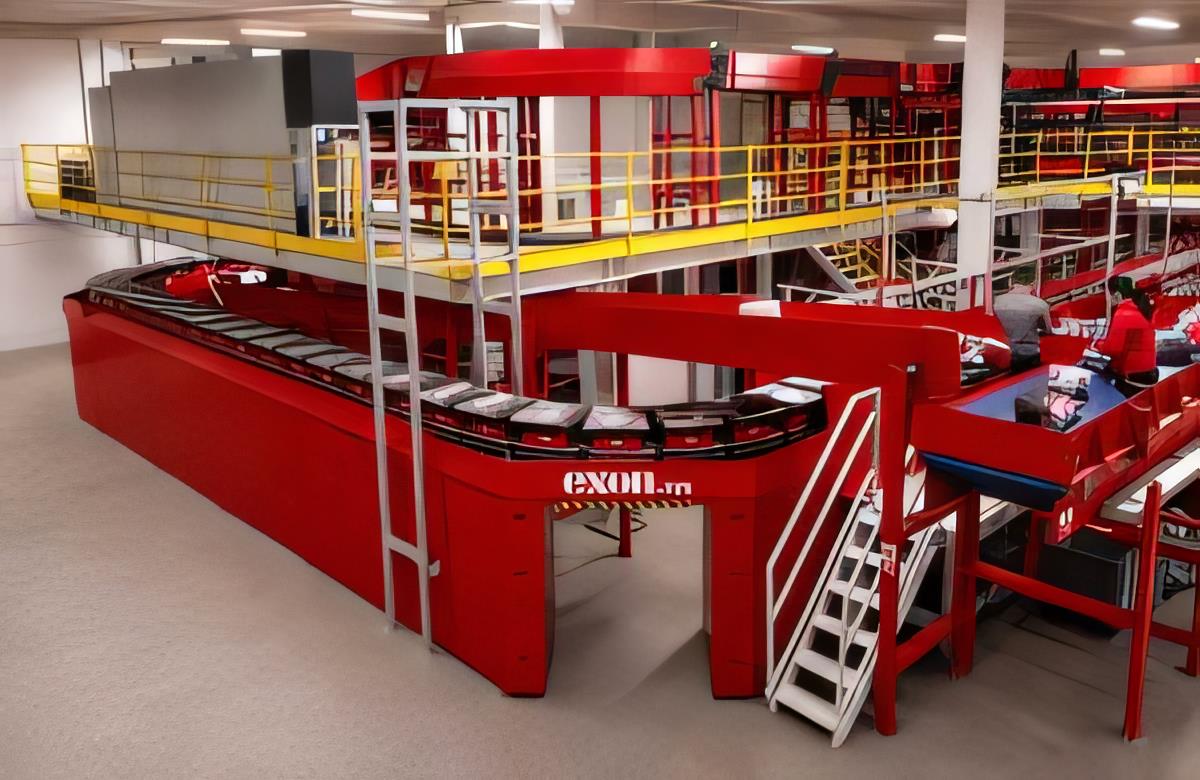
- Sortation Systems: throughput depends on sorter type and project; selection is based on peak-hour volume and item mix
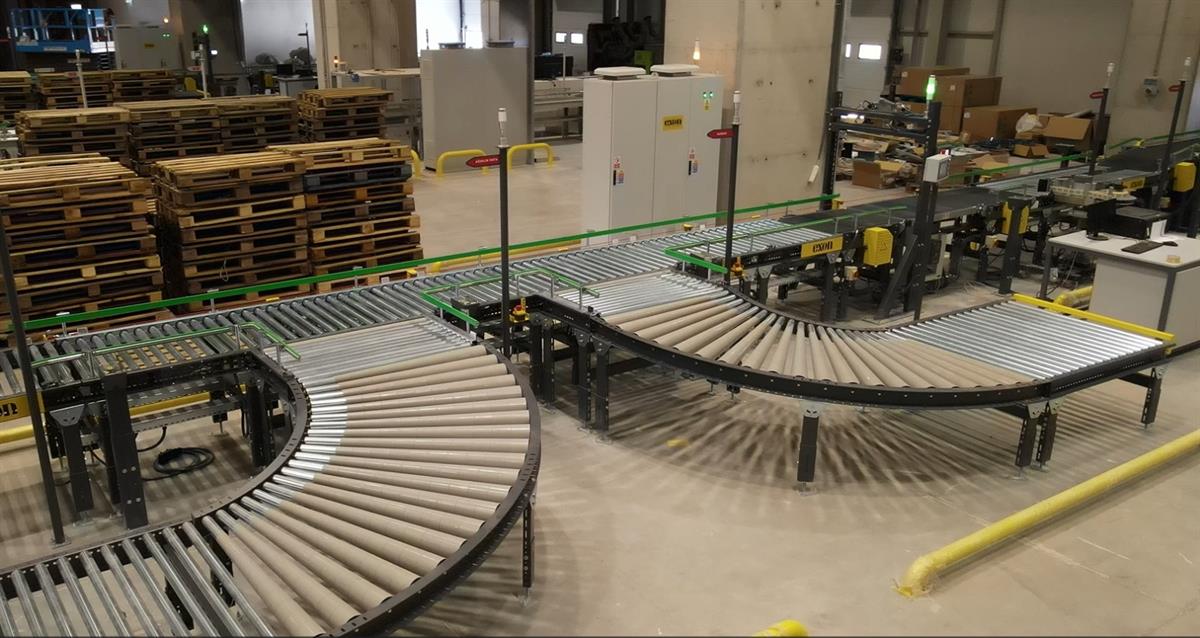
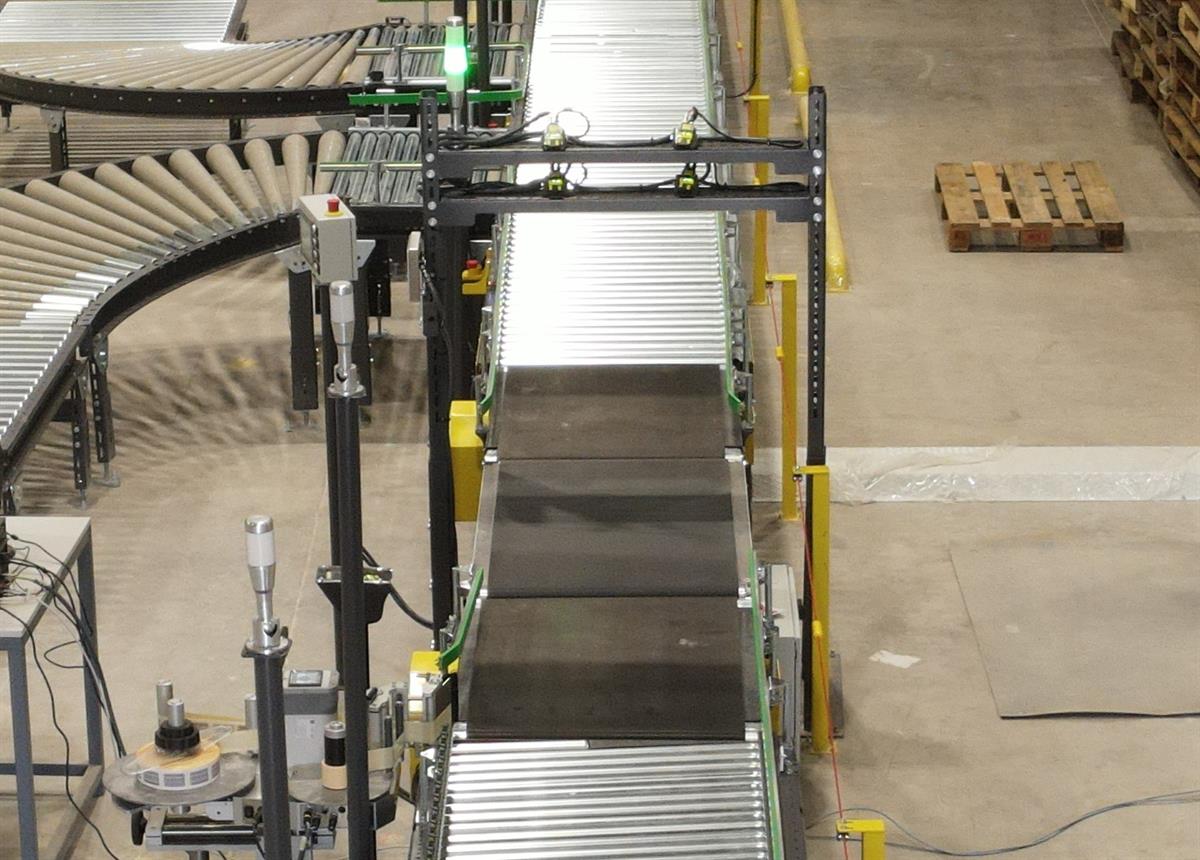
- Conveyor Systems: induction, merge and buffer lines
- DWS Systems: dimensions, weight and barcode without stopping the flow
- Sorter and conveyor cost guide: how throughput requirements affect the price
6 questions to ask about the throughput figure in a quote
- Which level? Is the figure machine, system or operational throughput?
- Which unit? Parcels, cartons, items, order lines or orders? With multi-line orders, the difference between these units is large.
- Which item mix? Do the sizes, weights and polybag share in the calculation match your real data?
- How many induction points? With how many induction lines and operators is the figure reached?
- What read and recirculation assumptions? Are no-read and recirculation rates included?
- How will acceptance be measured? What are the duration, parcel set and conditions of the throughput test? Are they written into the contract?
Common mistakes
- Taking last year's peak ratio. The channel mix may have changed, for example a larger e-commerce share. Then last year's peak-to-average ratio does not represent this year. Recalculate it with new order data.
- Expecting machine throughput on site. The brochure figure is usually the theoretical upper limit. System and operational losses come off it on site.
- Comparing different units. If one quote gives items per hour and another cartons per hour, the figures cannot be compared.
- Accepting after a one-hour test. A short test does not show shift changes, chute clearing or warm-up losses. Measure operational throughput over the duration written in the protocol.
- Leaving growth out of the design. The layout may not allow extra induction lines or chutes later. Then more throughput means a new project.
Frequently asked questions
What does items per hour mean?
It is the number of units handled per hour. Always state what the unit is: parcels, cartons, items or order lines.
What determines sorter throughput?
There is no fixed number. Machine throughput is set by sorter type, carrier pitch and line speed. Throughput on site is set by the number of induction points, read rate (%) and number of chutes. Item mix and layout also matter.
Are throughput and productivity the same thing?
No. Throughput is the quantity handled per unit of time. Productivity describes how many people, how much space and how much energy it takes. A line reaching the same throughput with fewer operators is more productive.
Can the throughput of an existing line be increased?
Often, yes. First, measure the bottleneck. Then you can add an induction line, speed up chute clearing or raise the read rate. Adding a buffer conveyor is another option. These can raise throughput without replacing the sorter.
Related terms
Related Exon systems
Last updated: