
What is a sorter chute?
The destination where the sorter drops a sorted parcel: a chute, a takeaway conveyor or a bag. This page explains chute types, how the number of chutes is set and how chutes are cleared.
-
1Discharge
The sorter drops the parcel into its destination chute.
Sortation Systems -
2Buffering
Parcels collect in the chute or on the chute conveyor. A full-chute sensor monitors the level.
Sortation Systems -
3Clearing
An operator takes the bag, cage or carton. On a conveyor outlet, parcels keep flowing.
Conveyor Systems -
4Shipping
Bags and cartons are moved to the dock and loaded onto the vehicle.
Telescopic Conveyors
Process flow. Yellow tags show the Exon system used in that step.
Definition
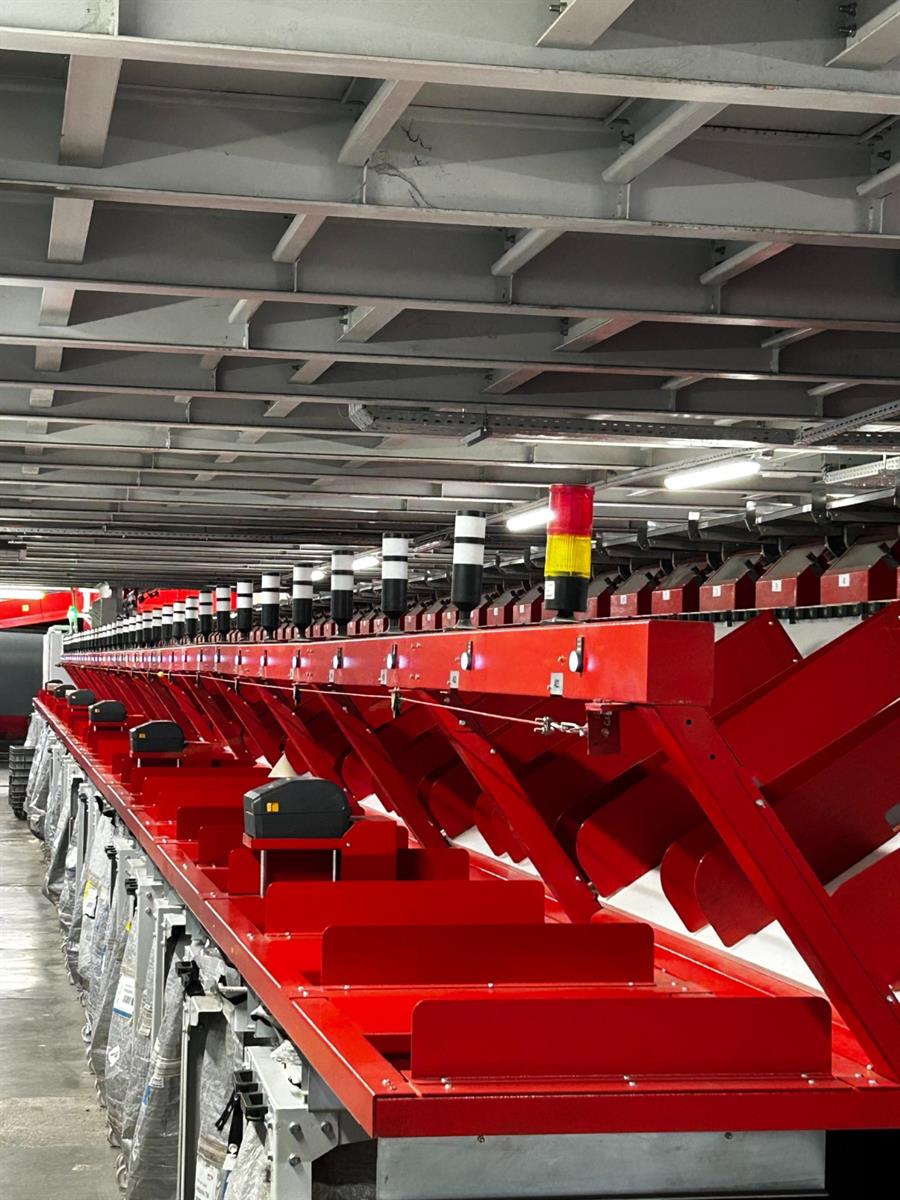
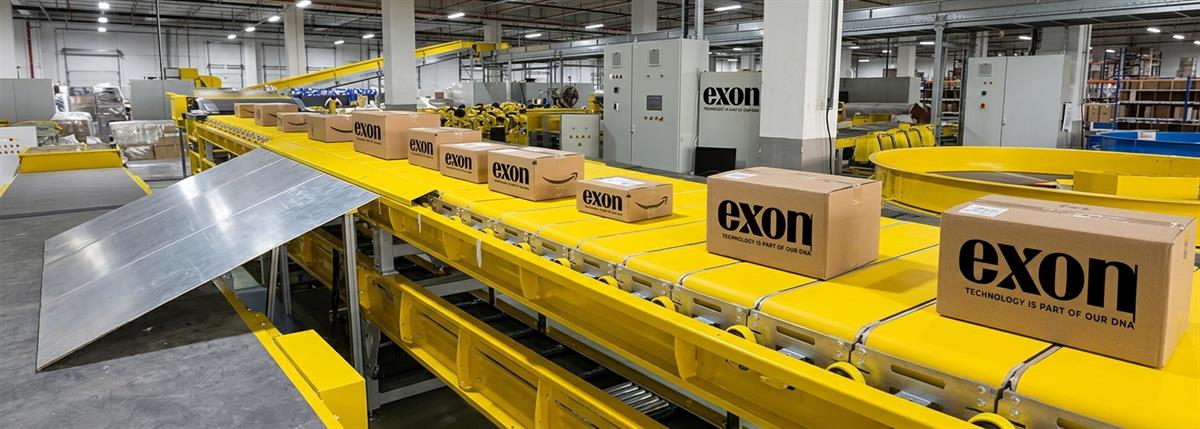
A sorter chute is the destination where the sorter drops a sorted parcel. It can be an inclined chute, a takeaway conveyor, a bag, a cage or a packing station. Each chute is assigned to a destination, store, route or order group. A sorter's hourly throughput is set mainly by its speed and carrier pitch. On sorters without carriers, the pitch is the parcel length plus the gap. How close you get to that rate on site depends on induction, empty carriers and chutes. If a chute is not cleared in time, the parcel cannot be dropped and throughput falls.
Other names: sorter outlet, sorter destination, discharge chute, sort destination.
Flow at the chute: 4 steps
- Discharge: The sorter drops the parcel into its destination chute. On a cross-belt sorter, the belt on the carrier discharges it. On a tilt-tray sorter, the tray tilts. Narrow-belt and pop-up sorters divert to the side. (Sortation Systems)
- Buffering: The parcel slides down the chute or collects on the chute conveyor. A full-chute sensor tells the control system when the chute is full. (Sortation Systems)
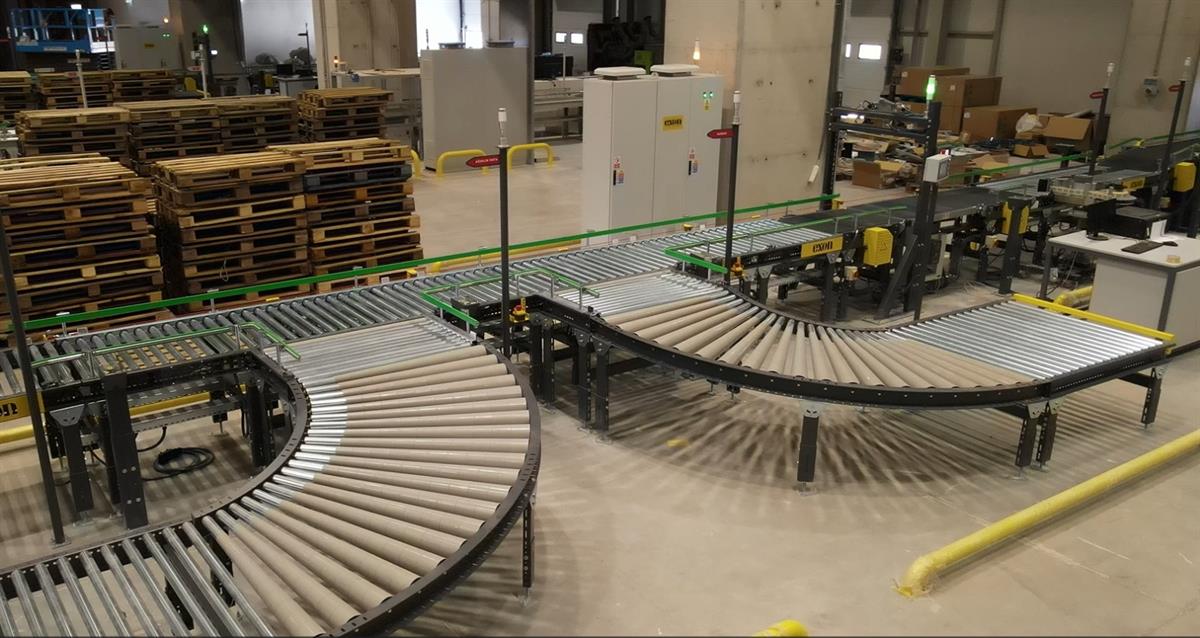
- Clearing: The operator closes the bag and hangs a new one, or takes the cage or carton. On a conveyor outlet, parcels flow straight to the shipping line. (Conveyor Systems)
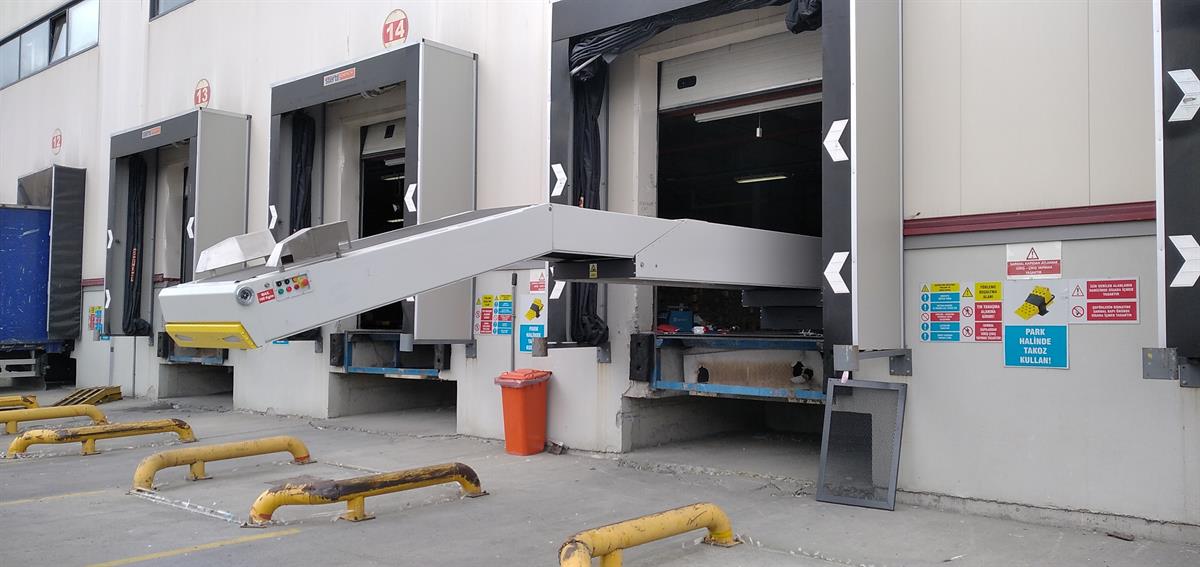
- Shipping: Bags and cartons are moved to the dock and loaded onto the outbound vehicle. (Telescopic Conveyors)
When a chute is full, the sorter cannot drop parcels into it. On a loop sorter, the parcel recirculates. Otherwise it goes to a chute reserved for full-chute parcels (overflow chute).
Chute types
| Chute type | How it works | Best for |
|---|---|---|
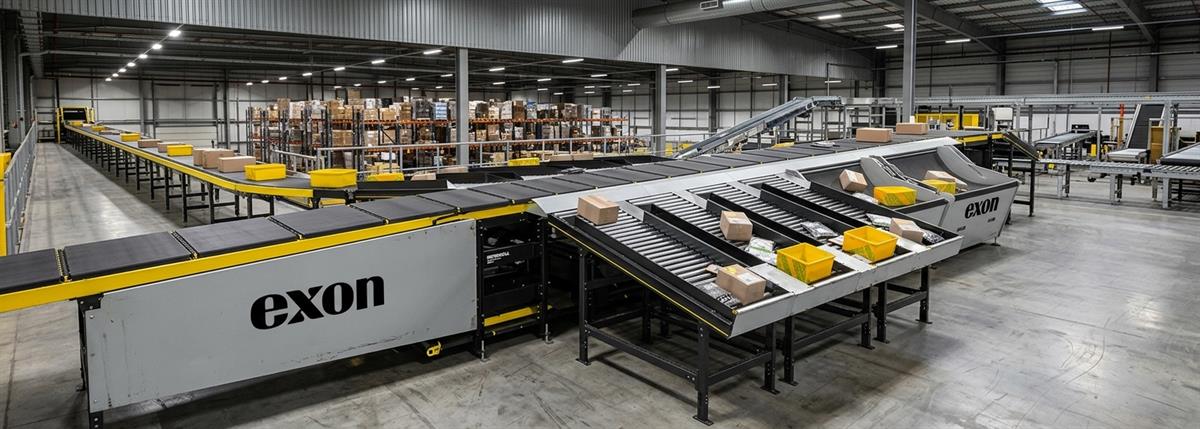
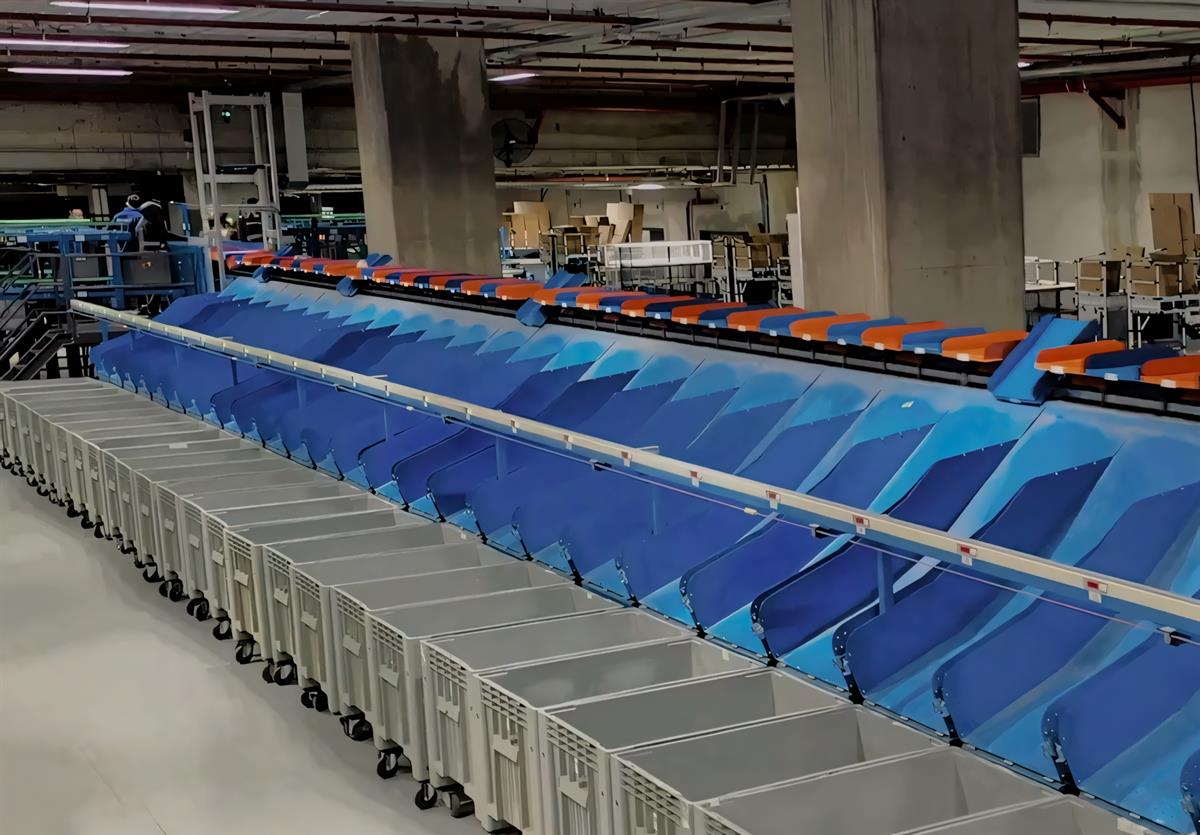
| Straight chute | The parcel slides down an inclined surface to the collection point | Small and medium parcels, bag or cage clearing |
| Double-deck / split chute | One chute splits into two destinations | Tight space, many destinations |
| Chute conveyor | The parcel travels on a belt or roller line | Cartons flowing straight to the dock or packing |
| Bag / cage station | The parcel drops straight into a bag | Parcel flows dominated by small items |
Chute slope, surface material and braking elements control parcel speed. A parcel that lands too hard gets damaged. One that slides too slowly blocks the chute. If polybags and cartons share a chute, design it for both.
How is the number of chutes set?
The number of chutes is one of the main items in a sorter quote. There is no fixed number. The calculation starts with the sum of these items:
- Destinations: Today's number of depots, routes, stores or order groups.
- High-volume destinations: A destination too large for one chute gets more than one.
- Special chutes: Chutes for no-reads, returns, manual handling and full-chute parcels, plus a reject chute.
- Growth: Depots and routes you will open in the coming years.
Then the chutes are fitted into the layout. Chute pitch follows parcel length. Chute length follows the buffer you need. Chute positions follow the docks and walking distances. If there are not enough chutes, consider a longer sorter, chutes on both sides or double-deck chutes.
Pre-design checklist
- Do you know the peak-hour volume for each destination?
- How many minutes does it take to fill a bag or cage? How many chutes will one operator handle?
- Are full-chute sensors and full-chute alerts (lights, screens) planned?
- Are the position and capacity of the overflow and reject chutes defined?
- How far is it from the chutes to the docks?
- Can chute assignment (which destination goes to which chute) be changed in the software?
Common mistakes
- Counting chutes only for today's destinations. No-read, returns and manual-handling parcels also need chutes. Leave spare chutes for new depots and routes. Otherwise you run out of chutes soon.
- Not planning chute clearing. If operators cannot clear chutes fast enough, chutes fill up all the time. Recirculation rises, carriers fill with those parcels and induction cannot add new ones.
- Giving a high-volume destination a single chute. That chute stays full. Split the load across two chutes or use a chute conveyor.
- Designing chutes without the item mix. Polybags and small parcels can get stuck. Heavy cartons slide down fast. Choose slope and braking accordingly.
Related Exon systems
- Sortation Systems: sorters planned with their number of chutes and layout
- Cross-Belt Sorter, Tilt-Tray Sorter, Narrow-Belt Sorter
- Conveyor Systems: chute conveyors and shipping lines
- Telescopic Conveyors: vehicle loading
Frequently asked questions
What is a chute on a sorter?
A chute is the inclined channel a parcel slides down after the sorter drops it. It ends at a collection point such as a bag, cage or conveyor.
What happens when a sorter chute is full?
The sorter does not drop parcels into it. On a loop sorter, the parcel recirculates. Otherwise it goes to the overflow chute. When the chute is cleared, the full-chute sensor opens it again.
How many chutes does a sorter have?
There is no fixed number. Destinations, high-volume destinations, special chutes and growth are calculated together. The layout and sorter type also set the limit.
Can chute assignments be changed later?
Yes. The control software defines which destination goes to which chute. It can be updated by shift, by season or for a new depot.
Related terms
Related Exon systems
Last updated: