
What is a WCS (warehouse control system)?
The control software that turns WMS tasks into real-time commands for conveyors, sorters and measuring equipment. This page explains what a WCS does and how it differs from a WMS and a PLC.
In short
- Task: The WMS sends the order and its destination (carrier, route, store) to the WCS.
- Identification: The barcode is read as the carton enters the line. The WCS matches it to the task.
- Routing: The WCS sets the carton's path at every divert and merge and commands the PLC.
- Chute assignment: The sorter assigns a destination chute. If it is full, an alternative is chosen or the carton recirculates.
- Feedback: Sort results, measurement data and error codes go back to the WMS.
Definition
A WCS (warehouse control system) is software that turns tasks from the warehouse management system (WMS) into real-time commands for automated equipment. That equipment includes conveyors, sorters, DWS systems and similar machines. The WCS tracks where every carton is on the line. It decides which conveyor and which chute each carton goes to. It reports the result back to the WMS. The WMS answers "what needs to be done". The WCS answers "how to do it right now".
Other names: warehouse control software, material flow control (MFC), control software.
What does a WCS do on the line?
On an automated line, more than one carton moves every second. Three decisions are needed for each carton. Which way does it turn at the divert? In what order does it enter at the merge? Which chute does it drop into on the sorter? The WCS makes these decisions. The PLC then runs the motors, sensors and diverters accordingly.
The WCS also keeps the line status: which chute is full, which conveyor has stopped, which carton was a no-read. When a chute is full, the carton is routed to an alternative chute. Without an alternative, it recirculates on a loop sorter (recirculation). On a linear sorter it goes to the reject chute. An alert appears on the operator screen. Line data (count, error rate, downtime) is collected in the WCS. Throughput reports come from this data.
Flow: 5 steps
- Task: The WMS sends the order and its destination (carrier, route, store) to the WCS.
- Identification: The barcode is read as the carton enters the line. The WCS matches the carton to the task. (DWS Systems)
- Routing: The WCS sets the carton's path at every divert and merge. It sends commands to the PLC. (Conveyor Systems)
- Chute assignment: A carton entering the sorter gets a destination chute. If the chute is full, an alternative is chosen or the carton recirculates. (Sortation Systems)
- Feedback: Sort results, measurement data and error codes go back to the WMS.
WMS vs WCS vs PLC
| WMS | WCS | PLC | |
|---|---|---|---|
| Role | Inventory, locations, orders | Real-time control of the whole line | Direct control of motors, sensors and diverters |
| Time scale | Hours, days | Seconds and below | Far below a second |
| Example decision | Ship this order on today's 4 pm cutoff | This carton goes to chute 12 | Fire the diverter now |
| When is it needed? | In every warehouse | When there are conveyors, sorters, shuttles or similar automation | In every automated machine |
The WMS plans, the WCS decides and the PLC executes. Some sites draw these boundaries differently. In a quotation, the layer name matters less. What matters is who makes which decision.
Exon's role
Exon develops the PLC and WCS software for its sorter and conveyor lines in-house. Mechanics, controls and software come from one team. So there is a single point of contact for faults and change requests. The WCS works integrated with the customer's existing WMS. After commissioning, Exon provides 24/7 support.
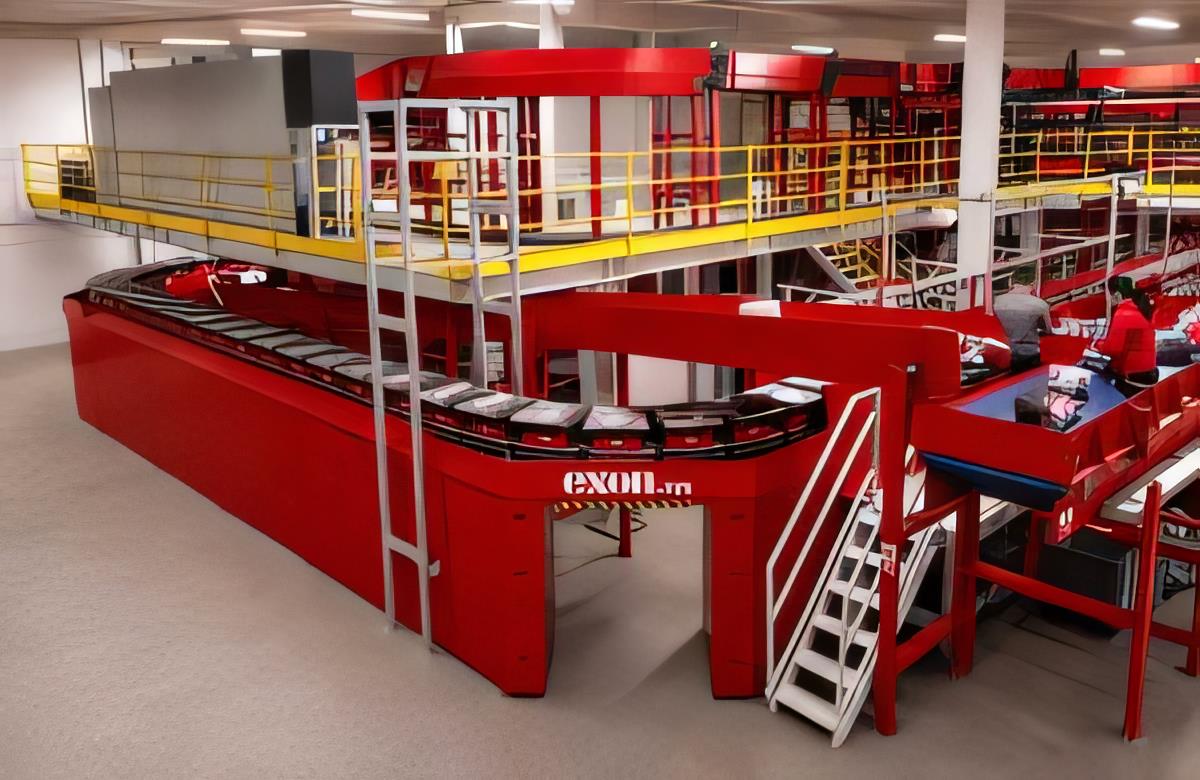
- Sortation SystemsChute assignment and recirculation handlingView →
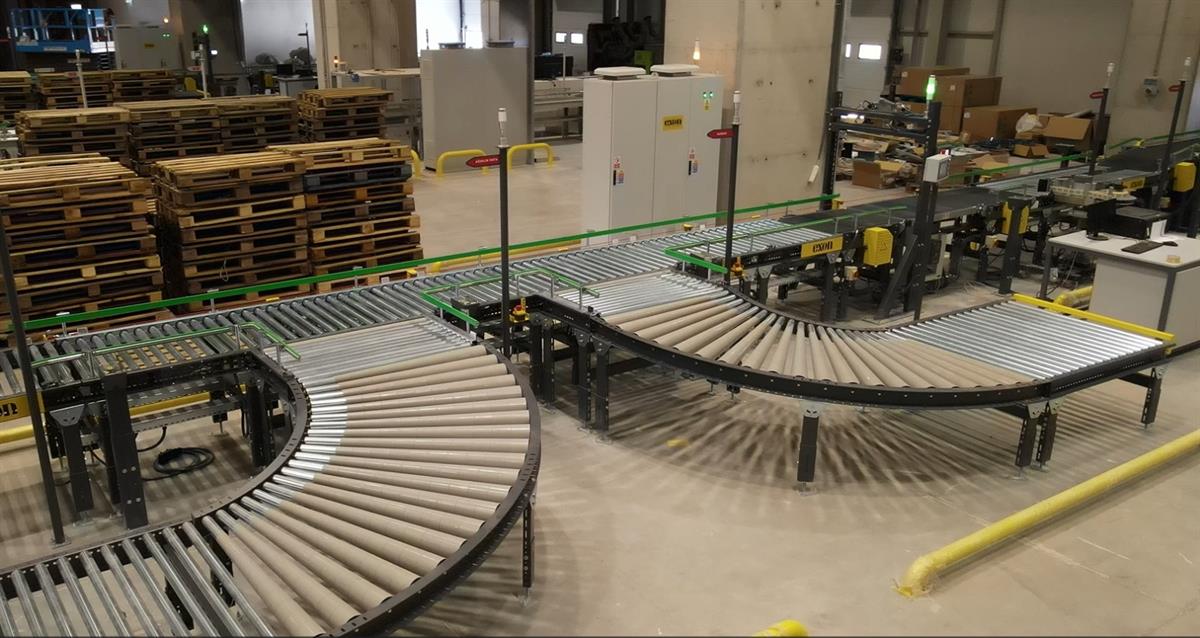
- Conveyor SystemsRouting, merging and sorter inductionView →
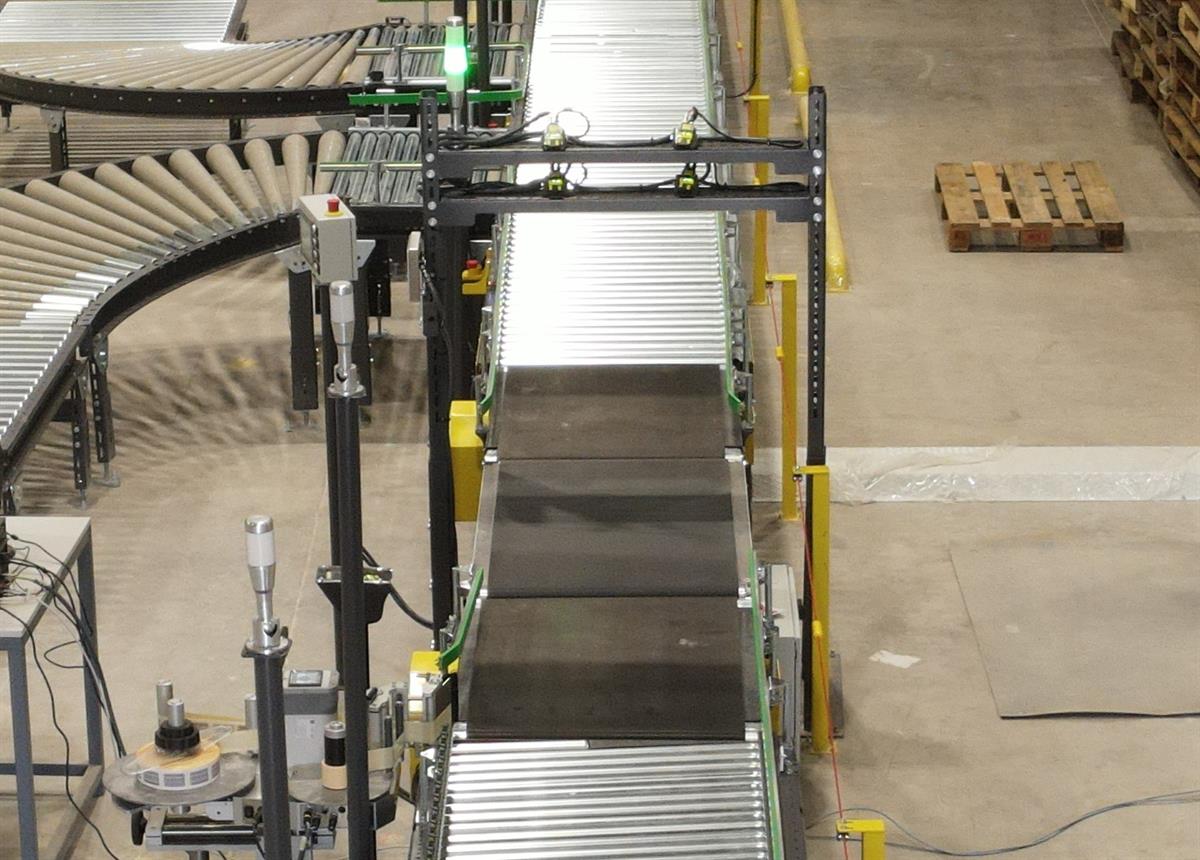
- DWS SystemsLinking measurement and barcode data to the flowView →
6 questions to ask about the WCS at quotation stage
- Interface: Which messages will be exchanged with the WMS? Over which protocol and how often? Is a sample message set included with the quotation?
- Rule management: Who changes chute assignment and sort rules, and from which screen? Does every change need a programmer?
- Exception handling: Is behavior defined for no-read, unmatched and destination-less cartons? If the WMS does not respond, does the line stop or continue?
- Reporting: On which screen will you track hourly count, read rate (%), recirculation rate and downtime?
- Testing: Will the software be tested at the factory, with real equipment or simulation? See factory acceptance test (FAT).
- Support: How is remote access provided for software faults? Who keeps the source code and documentation?
Common mistakes
- Assuming control lives inside each machine. Equipment from different suppliers may each bring its own controls. Then the line cannot be managed as a whole. Conveyors, sorter and measurement must meet in one control layer.
- Looking for throughput only in the mechanics. A mechanically capable sorter can run below its throughput. The cause may be slow WMS responses or slow chute assignment. Software response time is part of the throughput calculation.
- Undersizing the reject chute. No-read and unmatched rates can rise in peak season. Size the reject chute and manual handling area for that.
- Leaving reporting for later. Downtime causes and recirculation rates must be recorded. Otherwise you cannot find where throughput is lost.
Frequently asked questions
What is the difference between a WCS and a WMS?
A WMS manages inventory, locations and orders. It plans in hours and days. A WCS executes that plan on automated equipment in seconds. It decides which conveyor and which chute each carton goes to.
Does every warehouse need a WCS?
No. In a warehouse without automation, where operators do the work, a WMS is enough. Once conveyors, sorters or shuttles come in, a WCS is needed.
Is a WCS the same as a PLC?
No. A PLC is the controller that directly drives motors, sensors and diverters. The WCS sees the entire line. It tells the PLCs what to do with each carton.
Related terms
Last updated: