
What is a factory acceptance test (FAT)?
Testing the system at the manufacturer's facility, together with the customer, before shipment. This page explains how a FAT is run, what the protocol must state and how it differs from a SAT.
In short
- Protocol: Test scenarios, criteria and acceptance conditions are agreed with the customer in writing.
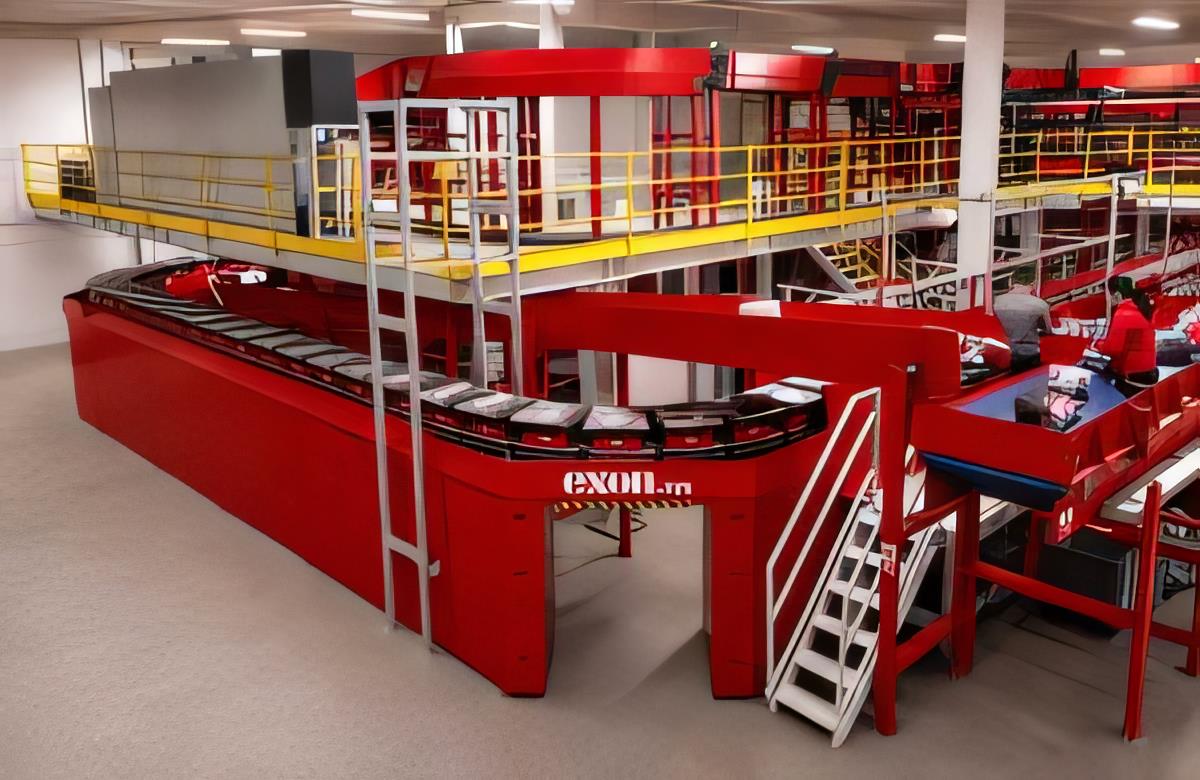
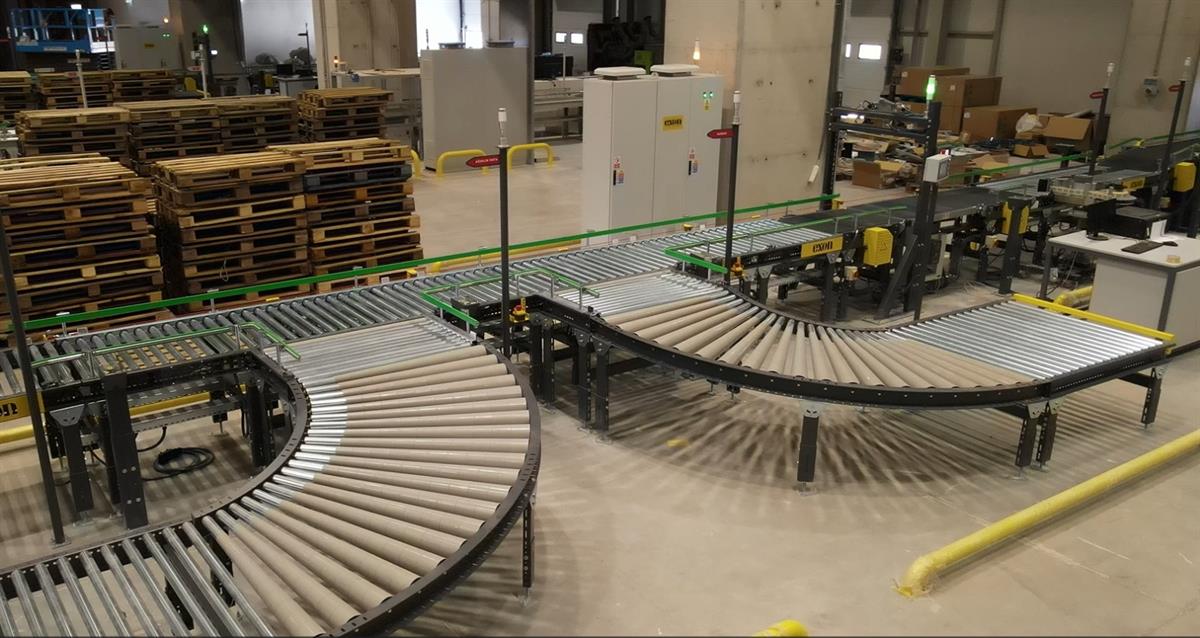
- Pre-assembly: The line or its critical modules are assembled and wired at the manufacturer's facility.
- Function tests: Every machine, sensor, emergency stop and safety circuit is tested one by one.
- Software and flow test: The control software is tested with real equipment or simulation; exception scenarios are tried.
- Report and shipment: Findings are recorded, open items are closed and shipment is approved.
Definition
A factory acceptance test (FAT) is testing the system at the manufacturer's facility before shipment. The customer takes part in the test. It follows a protocol written in advance. The goal is to confirm that the system works to specification before it ships. Errors are found at the factory, not on site. The test ends with a signed FAT report.
Other names: FAT, factory test, pre-shipment test.
Why is a FAT done before site work?
An error found on site is expensive. The team waits on site. The building and other contractors are tied to the schedule. Parts and people must travel for every change. At the factory, the same error is fixed at the bench, next to the production team. That is why the FAT is planned as the place where mechanics, electrics and software first run together.
In intralogistics projects, the whole line may not fit in the factory. Then the FAT is done module by module. A single sorter section, an induction line or a telescopic conveyor runs fully. The rest of the line is represented by simulation.
How is a FAT done? 5 steps
- Protocol: Test scenarios, criteria and acceptance conditions are agreed with the customer in writing.
- Pre-assembly: The line or its critical modules are assembled and wired at the manufacturer's facility. (Conveyor Systems)
- Function tests: Every machine, sensor, emergency stop and safety circuit is tested one by one. (Sortation Systems)
- Software and flow test: The control software is tested with real equipment or simulation. Exception scenarios are tried too.
- Report and shipment: Findings are recorded and open items are closed. Then shipment is approved.
FAT vs SAT
| FAT | SAT | |
|---|---|---|
| Location | Manufacturer's facility | Customer's site |
| Timing | Before shipment | After installation and commissioning |
| What does it prove? | Equipment and software work to specification | The system works in the real building, with the real WMS and products |
| Scope | Modules or line sections, simulated flow | The entire line, integration, throughput |
| Outcome | Shipment approval | Acceptance and handover |
A FAT does not replace the site acceptance test (SAT). The building, the floor, the real item mix and the customer's WMS can only be tested on site.
FAT in Exon's project process
Exon runs the FAT at its own facility with the customer taking part. The FAT follows the production, assembly and software-simulation steps. It is completed before commissioning on site. Mechanics, production and control software are in one company. So the same team closes any error found at the factory. Errors do not bounce between suppliers. Company information: About Us.
- Sortation SystemsChute assignment, scanning and reject chute testsView →
- Conveyor SystemsSpeed, merge, buffer zone and safety circuit testsView →
FAT protocol checklist
Both parties should sign the protocol before the test. At a minimum, it should state:
- Scope: Which modules are tested physically at the factory? Which are represented by simulation?
- Function list: Start, stop, speed, sensor and divert tests for each machine.
- Safety: Emergency stops, guards, light curtains and interlock circuits tested one by one.
- Test items: Real cartons, polybags and envelopes, including the smallest, largest and heaviest item.
- Exception scenarios: No-read barcode, full chute, jam and restart after a power outage.
- Software: WMS messages tried with sample data, operator screens and reports.
- Documentation: Electrical drawings, maintenance manuals, spare parts list and CE declaration of conformity.
- Acceptance criteria: Which item counts as "accepted" and which as "accepted with open items"? Closing dates for open items are written down too.
Common mistakes
- Writing the protocol on test day. Without criteria agreed in advance, the test becomes a demo. When the test counts as passed stays disputed.
- Testing only with standard cartons. If polybags, envelopes and long parcels are not tried at the factory, problems appear on site on the first peak day.
- Leaving software out of the FAT. The mechanics may work, but exception and restart scenarios were never tried. Then a large share of site downtime can come from software.
- Not bringing the operations team. Sometimes only project and purchasing staff attend the FAT. Then operator screens and maintenance access are not judged through real users' eyes.
Frequently asked questions
What does FAT stand for?
Factory acceptance test. It means testing the system at the manufacturer's facility before shipment.
What are FAT and SAT?
A FAT tests the system at the manufacturer's factory before shipment. A SAT (site acceptance test) is done at the customer's site after installation. Projects run both, one after the other.
What is a FAT report?
It is the test document signed by both parties. It lists the items tested, the results and the errors found. It also contains the plan for closing open items. Shipment approval is based on this report.
Who should attend a FAT?
On the customer side: the project manager and an operations or shift manager. The maintenance team and the IT/WMS lead should be there too. On the manufacturer side: mechanical, electrical and software engineers.
Related terms
Last updated: