
What is intralogistics?
The flow of goods and information inside the walls of a warehouse, distribution center, parcel hub or factory. This page covers the flow steps, the systems used and the questions to ask when planning.
- 1Receiving and unloading Telescopic Conveyors
- 2In-facility conveying Conveyor Systems
- 3Storage AS/RS Systems Shuttle Systems
- 4Order picking Pick-to-Light
- 5Packing, measuring and sorting DWS Systems Sortation Systems
- 6Shipping and loading Telescopic Conveyors
Process flow. Yellow tags show the Exon system used in that step.
Definition
Intralogistics is the flow of items, cartons and parcels inside a facility. The facility may be a warehouse, distribution center, parcel hub or factory. The flow runs from receiving to shipping and covers conveying, storage, picking and sorting. The equipment that moves goods (conveyors, sorters, storage systems) and the software that controls it are planned together.
Other names: internal logistics, in-plant logistics, warehouse logistics. In the US, "material handling" is often used for the same field.
Logistics moves goods between cities and countries. Intralogistics starts when the truck reaches the loading dock. It ends when the outbound truck leaves. This is where a facility's capacity is set: how many shipments it handles, with how many people and how many errors.
Flow inside the facility: 6 steps
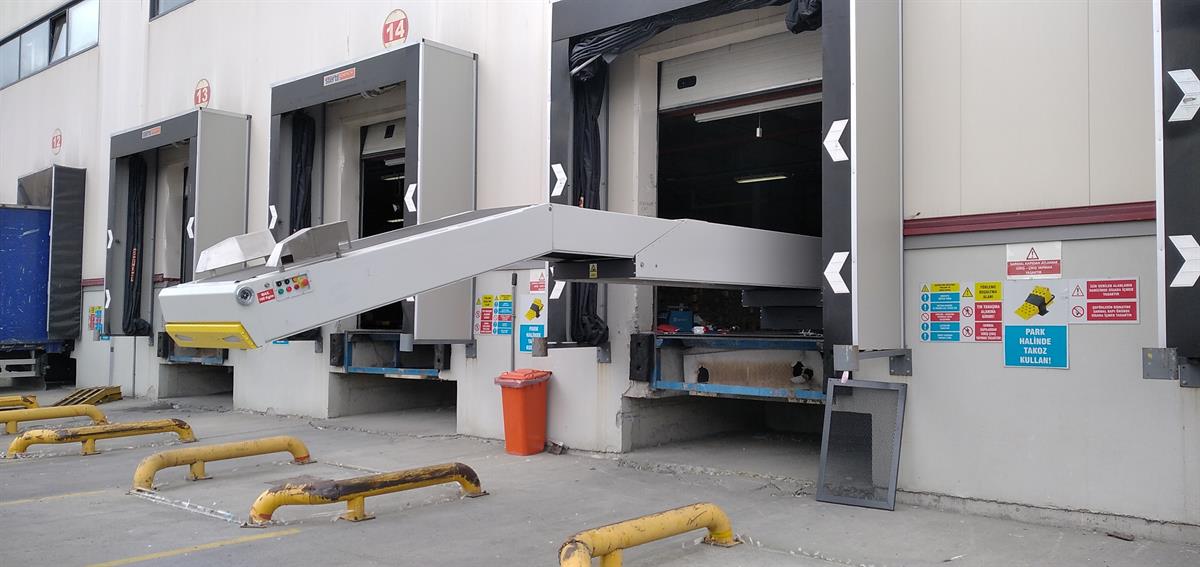
- Receiving and unloading: The inbound truck is docked and cartons are unloaded. Barcodes and delivery notes are checked. For floor-loaded cartons, a telescopic conveyor extends into the truck. (Telescopic Conveyors)
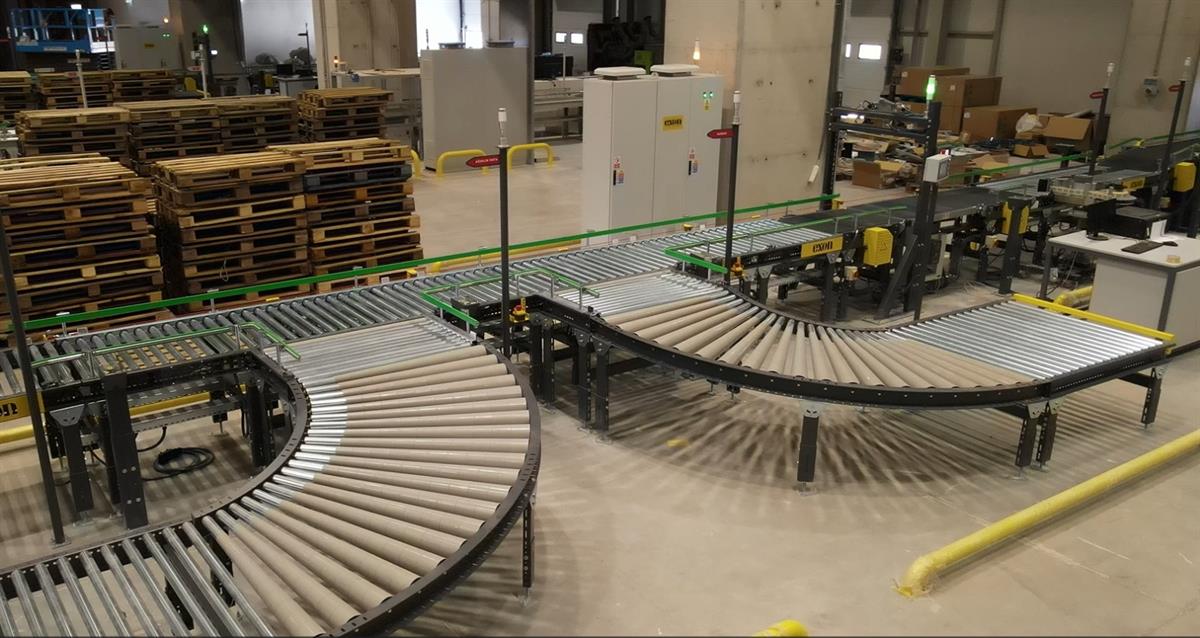
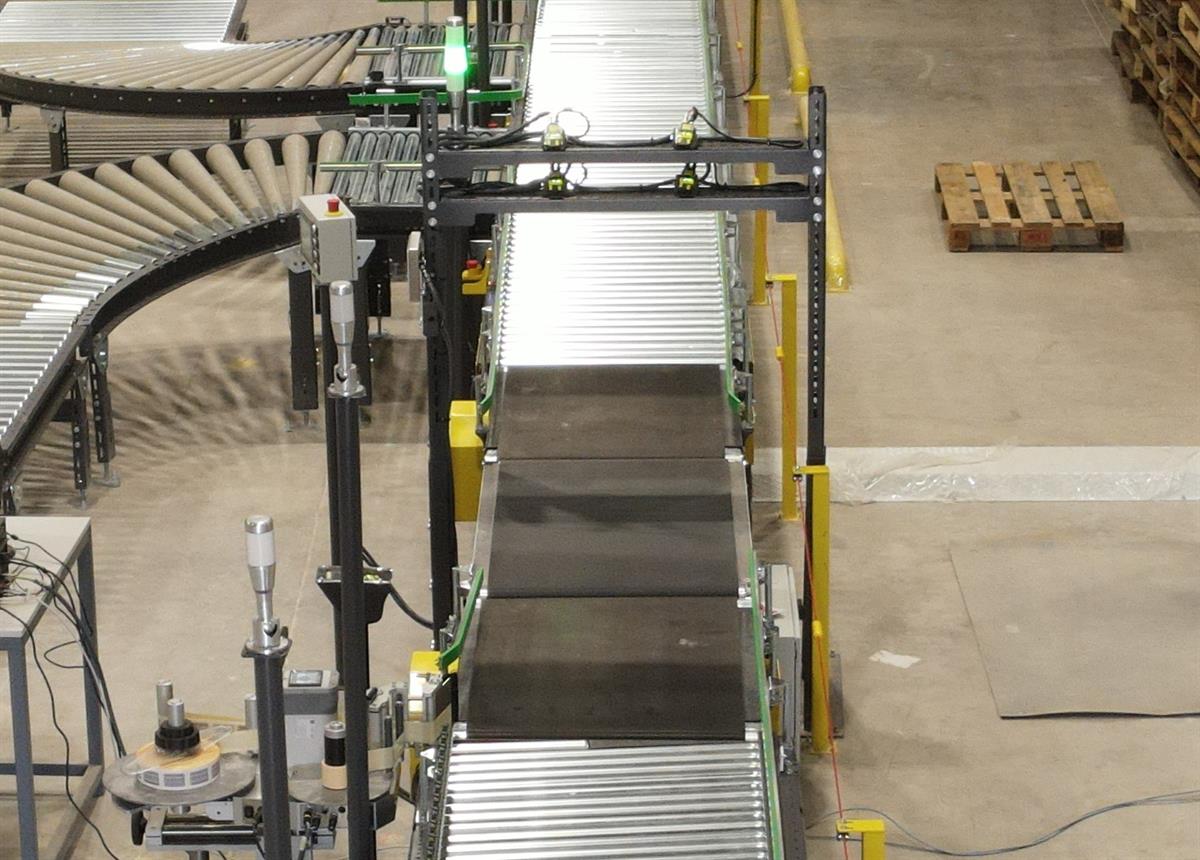
- In-facility conveying: Cartons and totes travel from receiving on conveyor lines. They go to storage, picking or sorting. (Conveyor Systems)
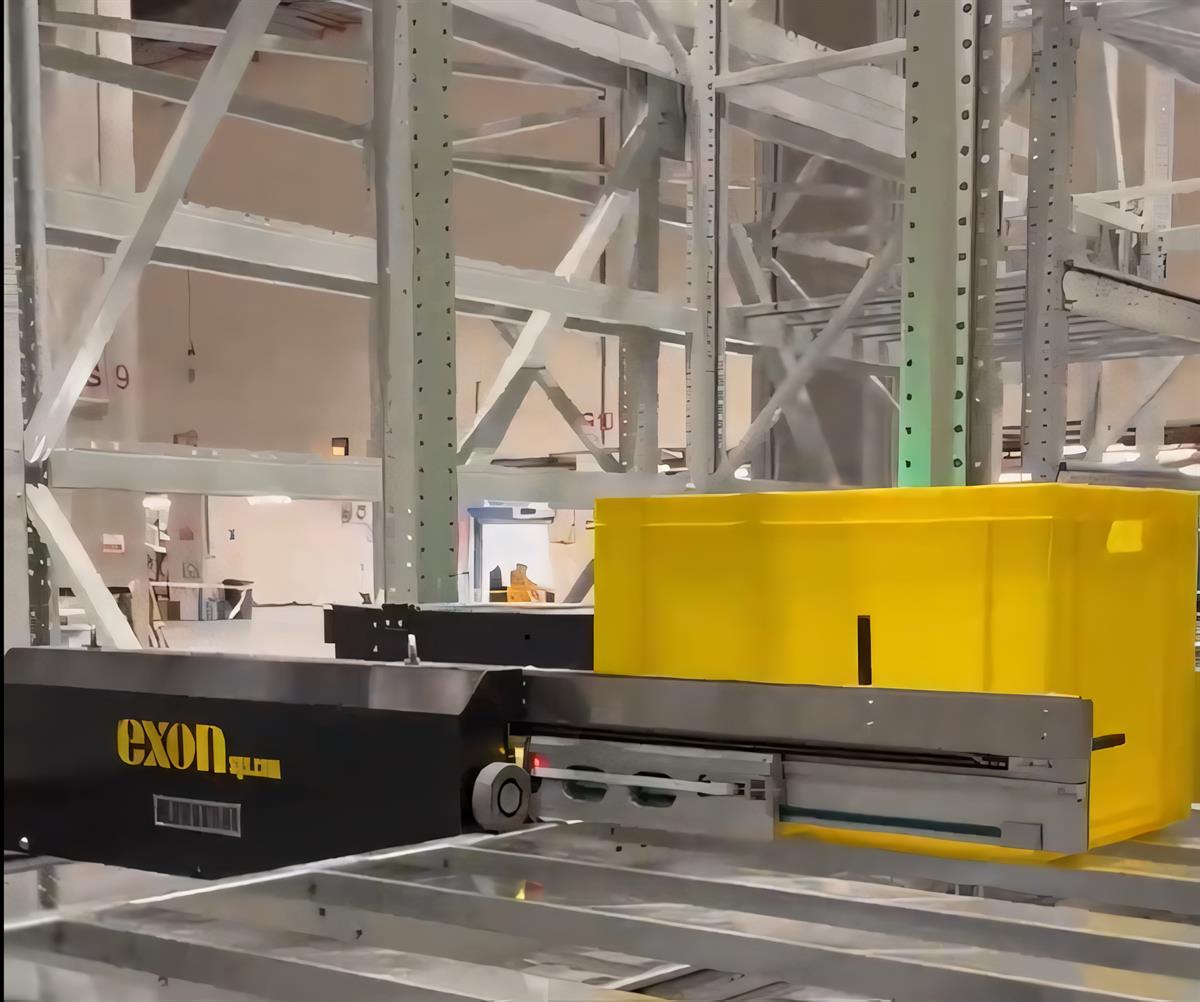
- Storage: Goods go into racking, an automated storage and retrieval system (AS/RS) or a shuttle system for totes and cases. A parcel hub skips this step. Shipments are not stored there. (AS/RS Systems, Shuttle Systems)
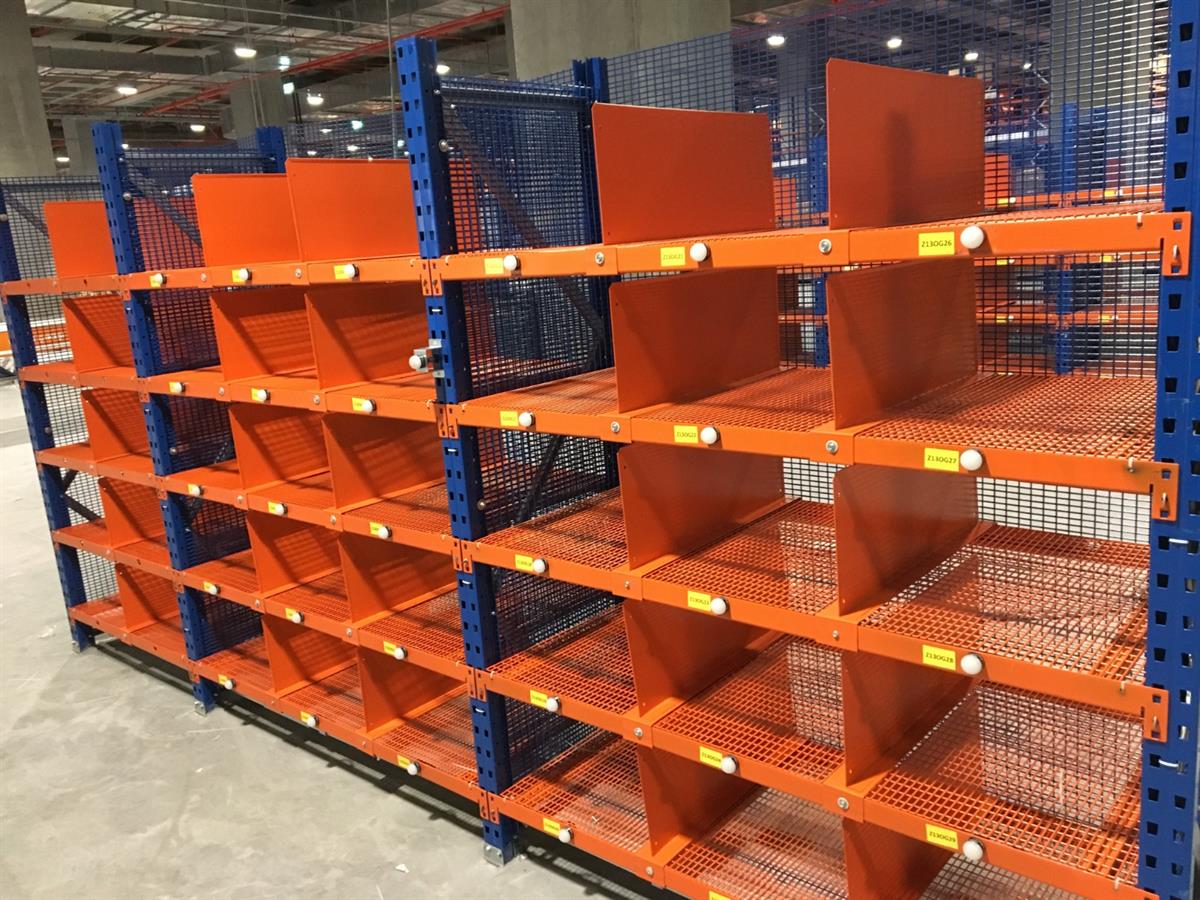
- Order picking: Order lines are picked from racking or automated storage. A pick-to-light system shows the operator which location to pick from and how many. (Pick-to-Light)
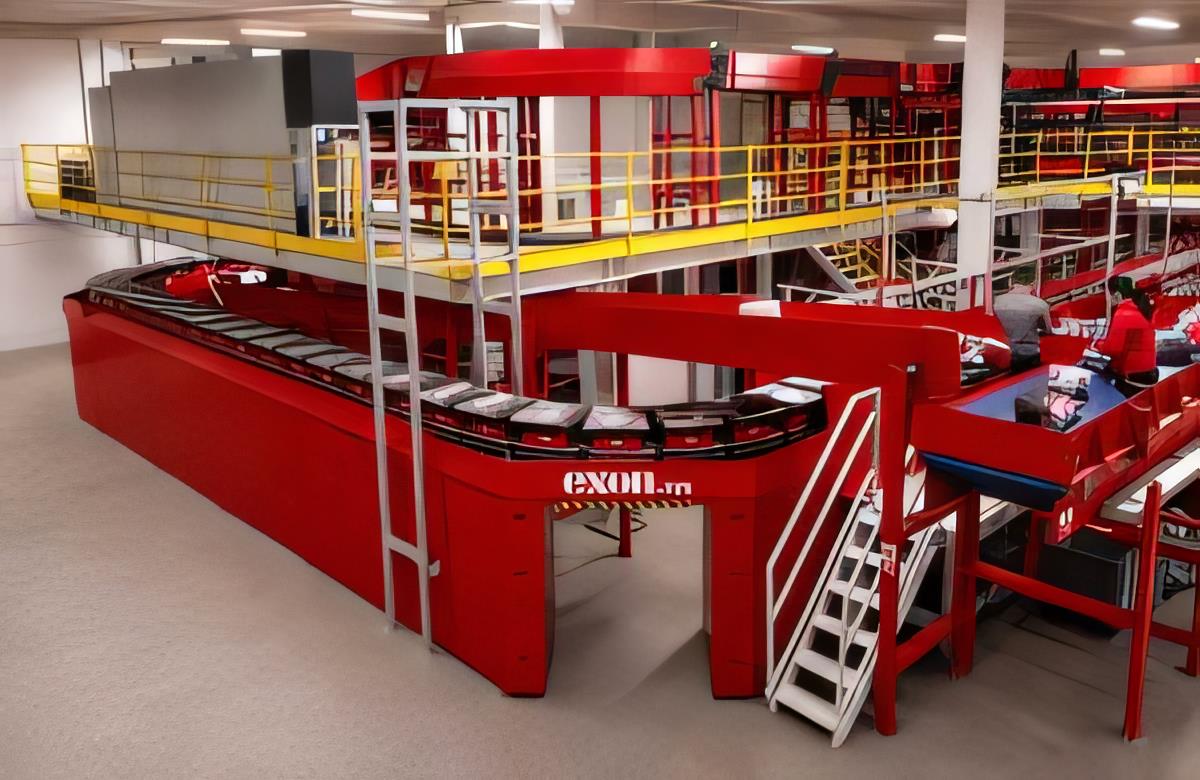
- Packing, measuring and sorting: Dimensions, weight and barcode of the packed order are captured. The order is then sorted by carrier, route or store. (DWS Systems, Sortation Systems)
- Shipping and loading: Sorted cartons are loaded onto the outbound truck. (Telescopic Conveyors)
A software layer runs this flow. The warehouse management system (WMS) manages stock and orders. The warehouse control system (WCS) controls the real-time movement of conveyors, sorters and other equipment.
Which steps dominate in which facility?
- Parcel hub: unloading, measuring, sorting and loading. No storage.
- E-commerce warehouse: storage and each picking. Many orders, few lines per order.
- Retail distribution center: carton and pallet flow, sorting by store.
- Manufacturing plant: line feeding, buffer stock and moving finished goods to shipping.
Related Exon systems
- Telescopic Conveyors: truck unloading and loading
- Conveyor Systems: belt, roller and curved conveyor lines
- Sortation Systems: narrow-belt, cross-belt, tilt-tray and pop-up wheel sorters
- Shuttle Systems and AS/RS Systems: automated storage
- Pick-to-Light: picking and put-away guided by lights at each location
- DWS Systems: dimensions, weight and barcode
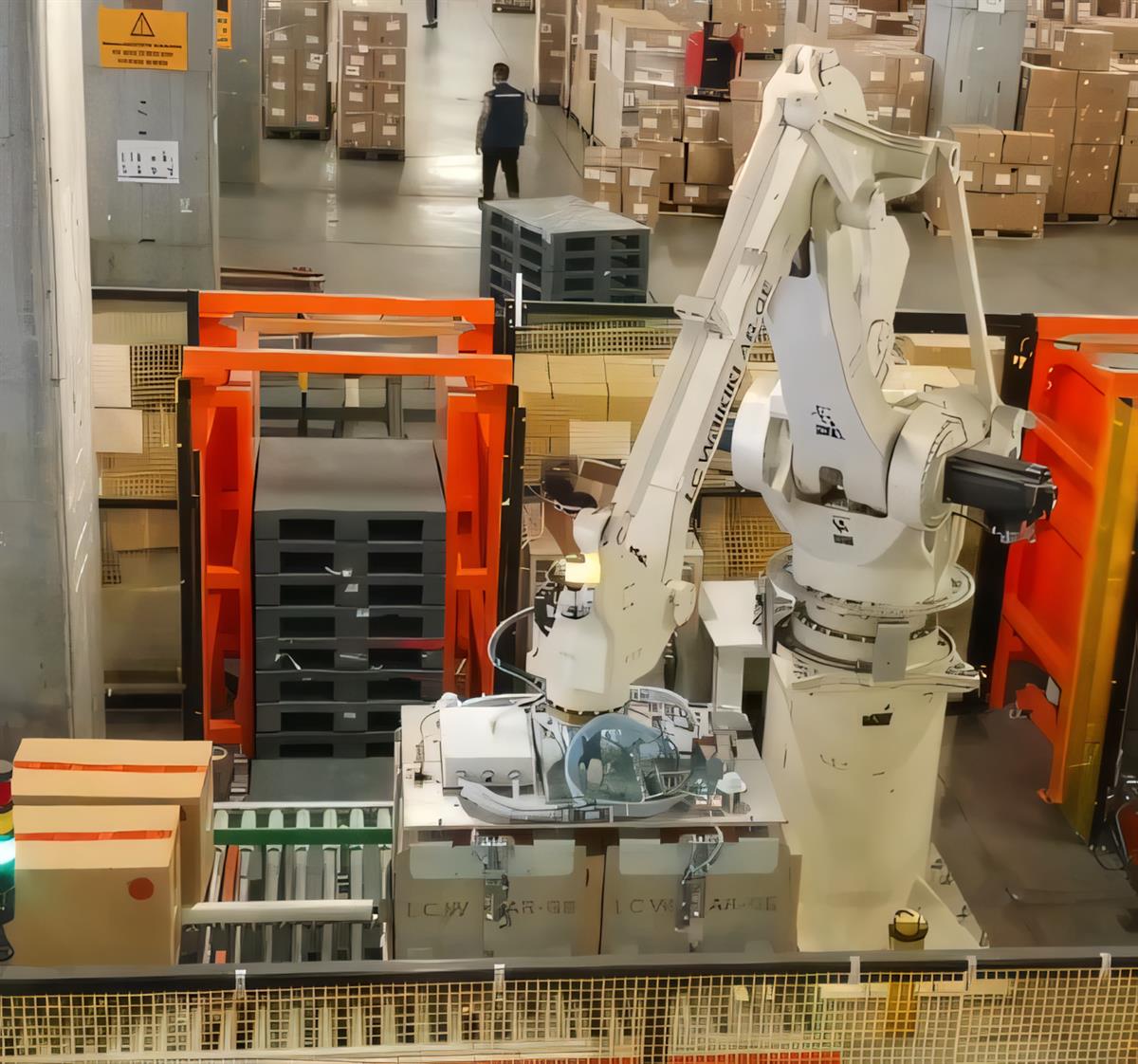
- Robotic Automation: palletizing and robotic applications
6 questions when planning an intralogistics project
- What is the handling unit? Pallet, carton, tote, polybag or single item? Equipment choice starts here.
- What does the volume profile look like? Peak hour rather than average, plus seasonality and growth.
- Which steps will be automated? The whole flow, or the section that costs the most labor and errors?
- What does the building allow? Clear height, column grid, floor, number and position of docks.
- How will the software communicate? Data exchange between the WMS, ERP or carrier software and the line's control software.
- How will cutover work? Which section goes live first without stopping operations?
Common mistakes
- Buying each step separately. Unloading, conveying and sorting may come from different suppliers. Responsibility then blurs where the lines meet. Bottlenecks can form at those points.
- Leaving software to the end. Barcode-to-destination mapping and order data must be defined before the equipment. Otherwise commissioning drags on.
- Laying out for today's volume. The layout should leave room for extra lines or chutes later. If it does not, growth needs a new project.
Frequently asked questions
What is the difference between intralogistics and logistics?
Logistics covers moving goods between facilities. Intralogistics covers the flow inside one facility. The truck's journey is logistics. Unloading it at the dock and sorting its contents is intralogistics.
Is intralogistics the same as material handling?
Largely, yes. "Intralogistics" is common in Europe. "Material handling" is the more common term in the US. Both cover equipment and software that move goods inside a facility.
Which systems does intralogistics include?
On the equipment side: conveyors, sorters, telescopic conveyors and automated storage (AS/RS, shuttle). Pick-to-light, DWS systems, pallet lifts, robots and autonomous vehicles are also part of it. The WMS and control software manage them.
What do inbound and outbound mean?
Inbound is receiving goods into the facility and putting them away. Outbound is picking, packing and shipping orders. Intralogistics covers both.
Related terms
Related Exon systems
Last updated: