
What is an AMR?
An autonomous mobile robot that senses its surroundings and plans its own route. This page explains how an AMR works and how it differs from an AGV. It also covers when it is the right choice in a warehouse.
In short
- What it is: A mobile robot that plans its own route with mapping and sensors and avoids obstacles
- Where it is used: Picking support, rack and tote transport, transfers between stations, returns and buffer stock
- When to choose it: Flows change often, space is shared with people, growth in steps is planned
- Exon's role: Installed and commissioned with conveyors, pick-to-light and robot cells as part of a turnkey project
Definition
An AMR (autonomous mobile robot) is a robot that carries loads in warehouses and factories. It senses and maps its surroundings with sensors such as lidar and cameras. It plans its own route. No tape or markers are needed on the floor. If an obstacle appears, it does not just stop and wait. It finds a new route around it. Tasks are assigned through fleet software.
Other names: autonomous mobile robot, mobile robot, warehouse robot. Note: in medicine, "AMR" also means antimicrobial resistance. This page covers the intralogistics meaning.
How does an AMR work?
- Mapping: At installation, the robot scans the area with a laser and builds a map. While running, it keeps locating itself on this map. This method is known as SLAM (simultaneous localization and mapping).
- Task assignment: The fleet software gives each task to the best robot. The robot's position, charge level and workload decide.
- Route planning: The robot calculates its own path to the target. No-go zones, one-way aisles and speed limits are set on the map.
- Obstacle avoidance: The robot may detect a person, a forklift or a pallet left in the aisle. It then slows down, stops or drives around it.
- Load transfer and charging: At the target, the load is transferred by hand or by a mechanism. This may be a top conveyor or a lift unit. When idle, the robot goes to charge by itself.
AMR vs AGV
Both provide driverless transport. They differ in how they find their way and make decisions. An AGV is bound to routes defined in software or on the floor. At an obstacle it usually stops and waits for it to clear. An AMR chooses its own route on the map and drives around obstacles. Route changes for an AMR are therefore mostly made in software. For an AGV, the floor infrastructure may have to change.
This flexibility has a cost. An AMR does not move the same way every time. As traffic grows, routes and arrival times vary. For some jobs, an AGV or a fixed conveyor gives more predictable results. These include repeatable precise positioning, heavy pallet transport and high-speed fixed flow. New AGVs with natural navigation can blur the line with AMRs. When choosing, the vehicle's behavior matters more than its label: what it does at an obstacle and how easily its route changes.
Where are AMRs used?
- Picking support: The robot follows the picker or carries totes between pick points. The operator does not walk full totes to packing.
- Rack or tote transport (goods-to-person): The robot drives under the rack or tote and brings it to a picking station.
- Transfers between stations: Used for variable flows between picking, packing, returns and quality control.
- Buffer stock and line feeding: Used between production cells and conveyor lines. It stands out where the flow changes often.
When is it the right choice?
- When flows change often: Seasonal layout changes, new stations or new product lines may come. Routes are then updated in software.
- When space is shared with people: In mixed traffic, an AMR usually drives around obstacles.
- When growth in steps is planned: As volume grows, robots are added to the fleet. There is no need to build a full fixed line up front.
- Caution when the flow is dense and fixed: There may be constant high-volume transport between the same two points. A fixed conveyor is then often the better option.
Which Exon systems does it work with?
- Robotic AutomationRobot cells and end-of-line automation; AGV/AMR transport if the project requires itView →
- Conveyor SystemsConveyor stations where the AMR picks up and drops loadsView →
- Pick-to-LightLight-directed picking and put-to-light for totes brought by AMRsView →
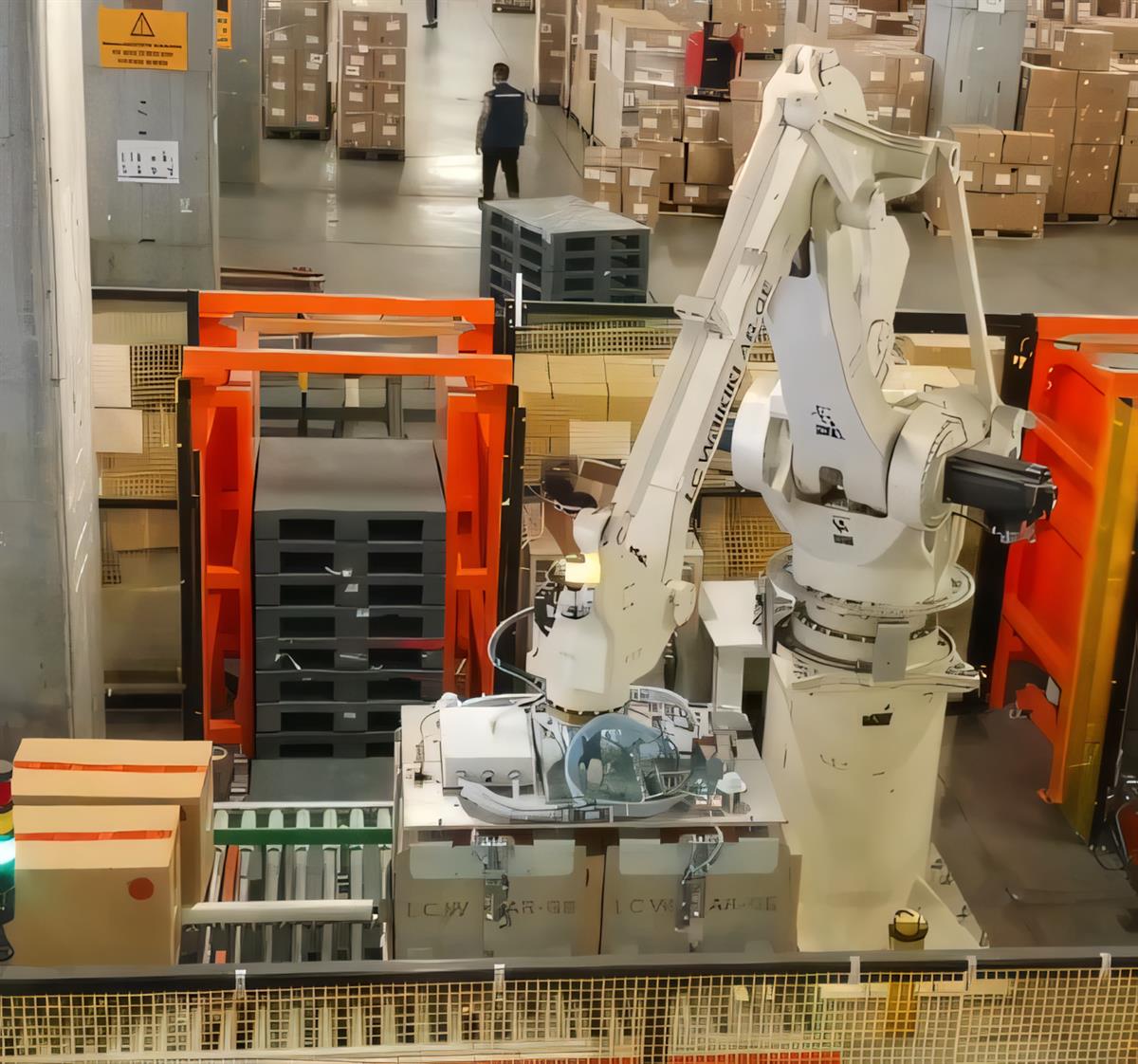
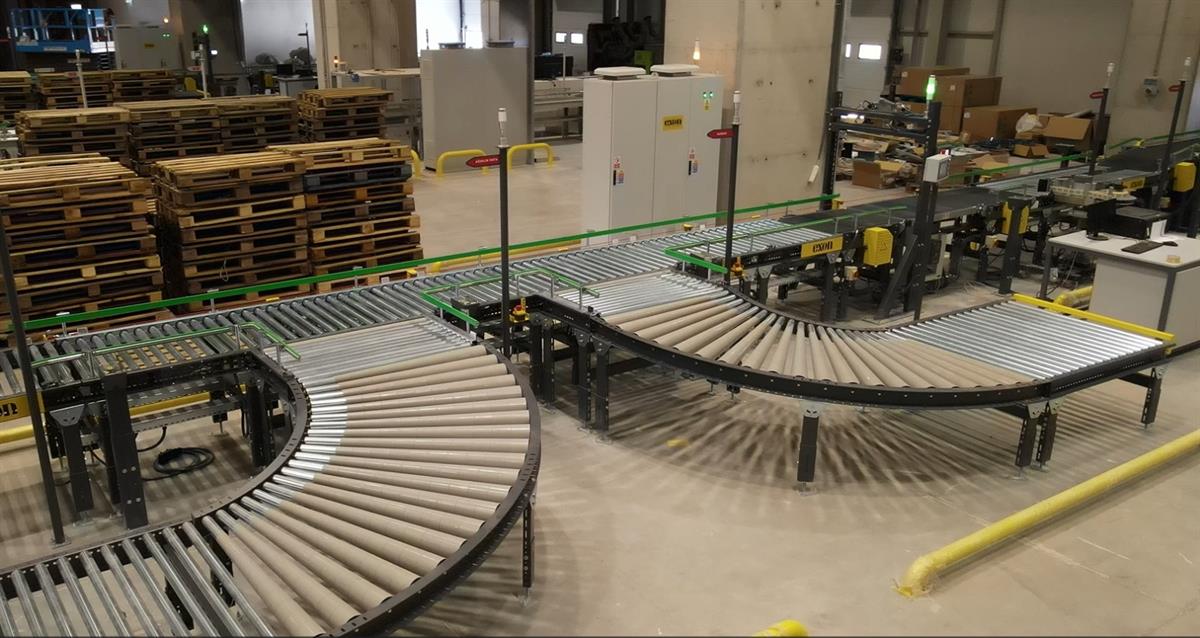
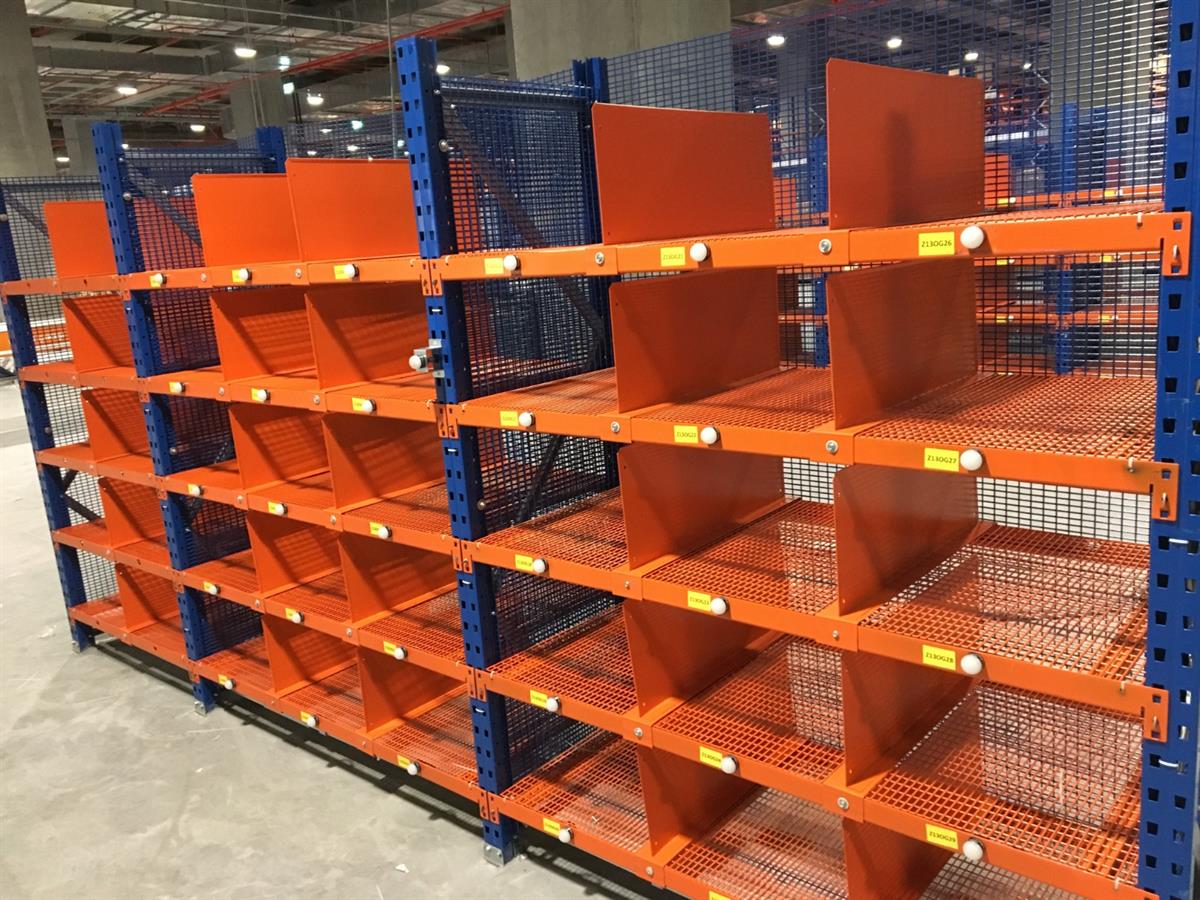
Exon designs, installs and commissions AMRs as part of a turnkey project. The robots are planned together with conveyors, pick-to-light and robot cells. Exon follows the EN ISO 3691-4 safety standard in AMR projects.
6 questions for an AMR project
- How many tasks in the peak hour? Fleet size is calculated from the task count. Distance, load transfer time and a charging margin count too.
- What will be carried? Totes, racks, carts or pallets. Weight and dimensions define the robot type.
- How will loads be transferred? By hand, by top conveyor or by lift unit? Transfer points are designed together with the fixed line.
- Aisles and traffic: Aisle width, doors, elevators and the number of people matter. They directly set the robot's speed and throughput.
- Software link: Will tasks come from the warehouse management system (WMS)? Messages between fleet software and warehouse software must be defined in writing. Do this before installation.
- Safety and acceptance: EN ISO 3691-4 sets safety requirements for driverless industrial trucks. Speed zones, the risk assessment and acceptance test scenarios should be written up front.
Common mistakes
- Sizing the fleet from one robot's speed. As the fleet grows, robots wait for each other. At junctions and narrow aisles, throughput does not grow linearly. Check it with simulation.
- Mapping once and walking away. Pallets left in aisles and changing rack layouts pull reality away from the map. Assign responsibility for floor discipline and map updates.
- Thinking about Wi-Fi coverage too late. The robot talks to the fleet software all the time. Coverage gaps break the task flow, and the robot may stop.
- Using AMRs instead of a conveyor. In dense, fixed flows a robot fleet struggles. It may not reach the throughput of a continuously running conveyor line.
Frequently asked questions
What does AMR stand for?
Autonomous mobile robot. In medicine, the same abbreviation is used for antimicrobial resistance.
AGV or AMR: which should you choose?
Both are driverless transport vehicles. An AGV follows a defined route; an AMR plans its own. AGVs suit fixed, repetitive flows that need precise positioning. AMRs suit flows that change often, are shared with people and will grow in steps.
Can AMRs be installed in an existing warehouse?
Usually yes, because no floor tape or markers are needed. Aisle widths and floor condition should still be reviewed. Wi-Fi coverage and load transfer points should also be checked.
Can AMRs work alongside people?
Yes, AMRs are designed for this. When the safety scanners detect a person, the robot slows down or stops. Heavy foot traffic lowers the robot's speed, though. The throughput calculation should include this.
Related terms
Last updated: