
What are MTBF and MTTR?
Mean operating time between two failures and mean time to repair. This page explains how both metrics are measured on an automated line and how to write them into a specification.
In short
- MTBF: average operating time between two failures. Higher is better.
- MTTR: average time from failure to running again. Lower is better.
- Availability = MTBF / (MTBF + MTTR). This is the most common basic formula.
- In a specification, how failures and times are counted matters as much as the value.
Definition
MTBF (mean time between failures) is the average operating time between two failures of a repairable system. MTTR (mean time to repair) is the average time a system needs to run again after a failure. Together they set the system's availability. Availability is the share of planned operating time in which the system is running.
Other names: mean time to restoration, system availability, uptime.
How are they calculated?
MTBF = total operating time / number of failures. If a line ran 400 hours in a month with 4 failures, MTBF is 100 hours.
MTTR = total repair time / number of failures. If those four failures took 2 hours to fix in total, MTTR is 30 minutes.
Availability = 100 / (100 + 0.5) ≈ 99.5%. In this example the line is not ready for about 0.5% of planned operating time because of failures.
The formula shows two things clearly. First, availability also depends on repair speed. If MTBF stays the same and MTTR halves, downtime halves too. Second, MTTR is not just wrench time. IEC 60050-192 defines the term as "mean time to restoration". The clock starts at the failure, so detection, waiting and parts supply all count. Some specifications count only active repair. The contract must state which one applies.
Why it matters on an automated line
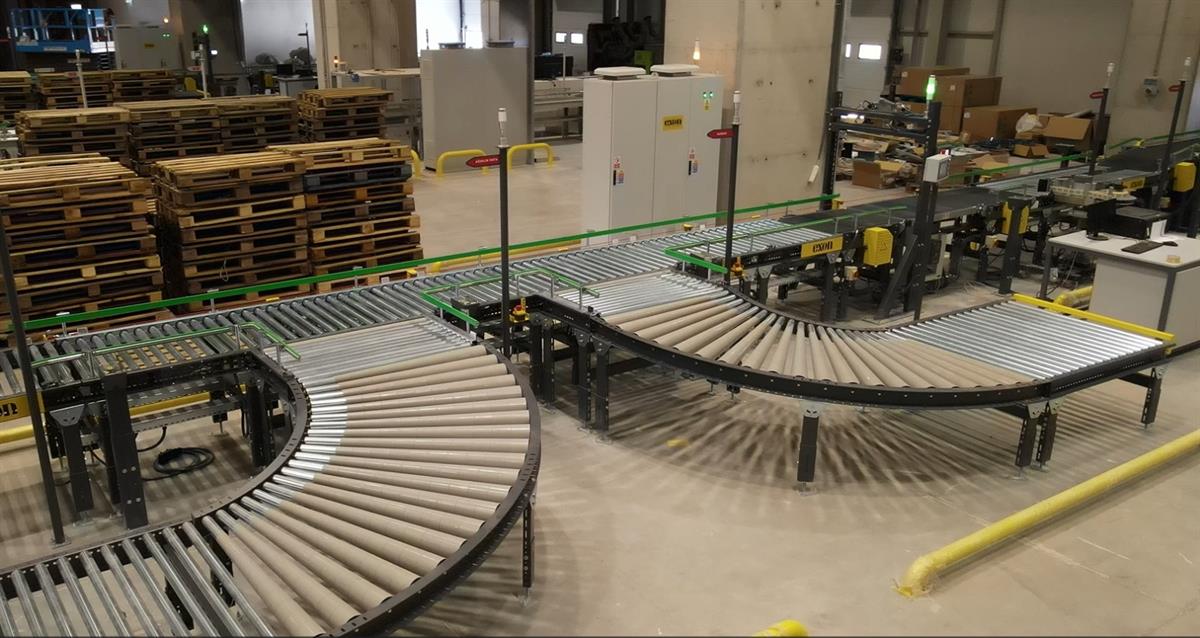
A sorter or main conveyor line works like a single chain. A failure on the main line can stop sortation for the entire site. In a parcel hub, truck departure times are fixed. Even a few minutes of downtime can push parcels to the next departure.
The common approach is to prevent failures and also keep them short. An operator screen that shows the fault location lowers MTTR. Easy-access modules, critical spare parts kept on site and a trained maintenance team have the same effect.
Availability on Exon lines
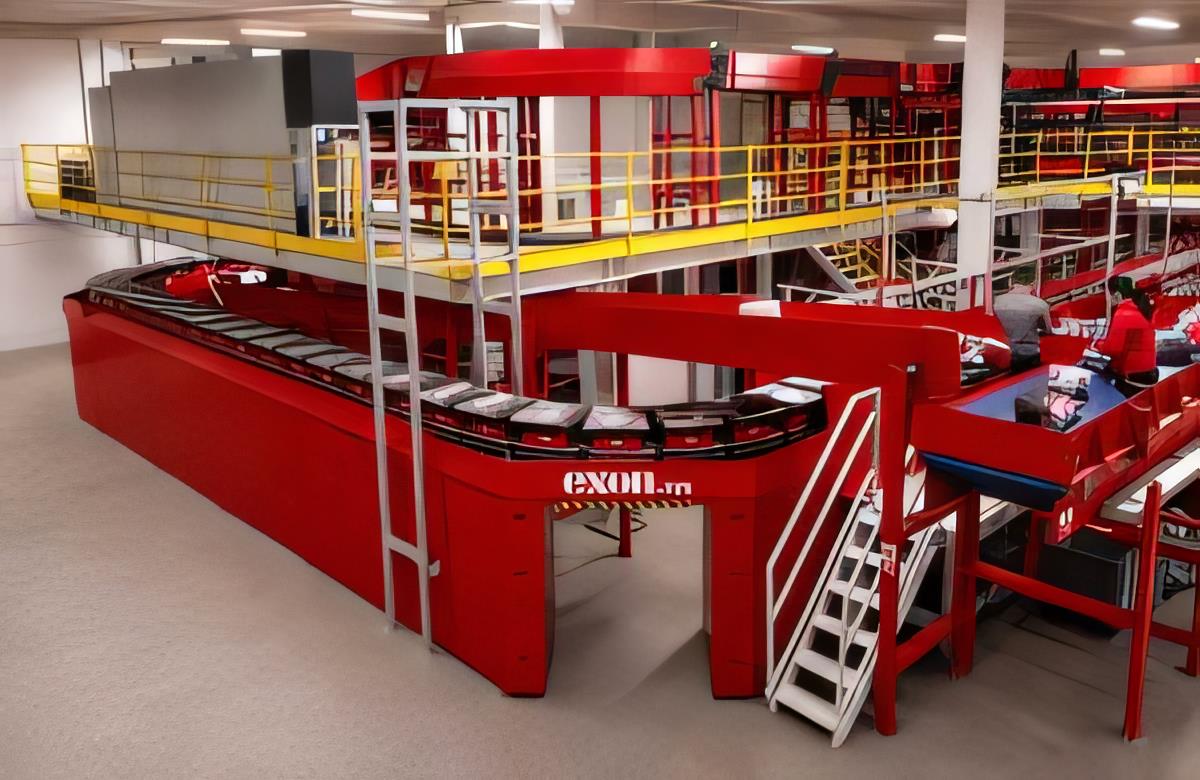
Exon does the mechanical design, production and control software of its sorter and conveyor lines in-house. A fault may come from mechanics, electrics or software. In every case the same team is responsible. This helps speed up diagnosis. Exon trains operator and maintenance teams and provides 24/7 support. Company information: About Us.
How to write MTBF, MTTR and availability into a specification
| Clause | Question to settle |
|---|---|
| Failure definition | Which event counts as a failure? A self-clearing jam, a hold-up the operator clears, or only a stop that needs a technician? |
| Responsibility class | Do an uncleared chute, no product at induction, a power outage or an unresponsive WMS count against the system? |
| Measurement scope | Is availability measured for the whole line, the main line, or each module separately? |
| Start of the clock | Does MTTR start when the alarm is raised or when the technician is notified? |
| Measurement period | Is the value measured during SAT or in the first months of operation, and for how long? |
| Data source | Are downtimes taken from the control software log or from the shift log? |
Common mistakes
- Looking only at MTBF. Rare but long failures can cause more loss than frequent but quickly fixed ones. Read both values together.
- Counting planned maintenance as failure, or not counting it at all. Planned maintenance usually stays out of the availability calculation. But maintenance during the peak hour stops operations. Write maintenance windows separately.
- Confusing component and system values. One motor's catalog MTBF does not show the availability of a line built from dozens of motors, sensors and software.
- Not keeping records. Log downtime causes and durations in the control software. Otherwise MTBF and MTTR become guesses. You also cannot find what to improve.
Frequently asked questions
What is the difference between MTBF and MTTR?
MTBF measures how often failures occur, MTTR how fast they are fixed. MTBF is the average operating time between two failures. MTTR is the average time to clear a failure.
How is MTBF calculated?
Divide total operating time by the number of failures. For example, 4 failures in 400 operating hours gives an MTBF of 100 hours.
How can MTTR be reduced?
An operator screen that quickly shows the fault location is the first step. Easy-access modules and critical spare parts on site shorten the time. A trained maintenance team and fast access to technical support also lower MTTR.
Related terms
Last updated: