
Pop-up Wheel Sorter
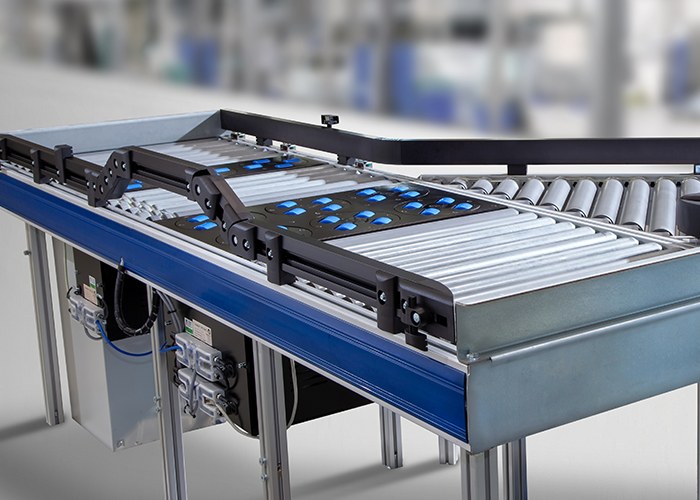
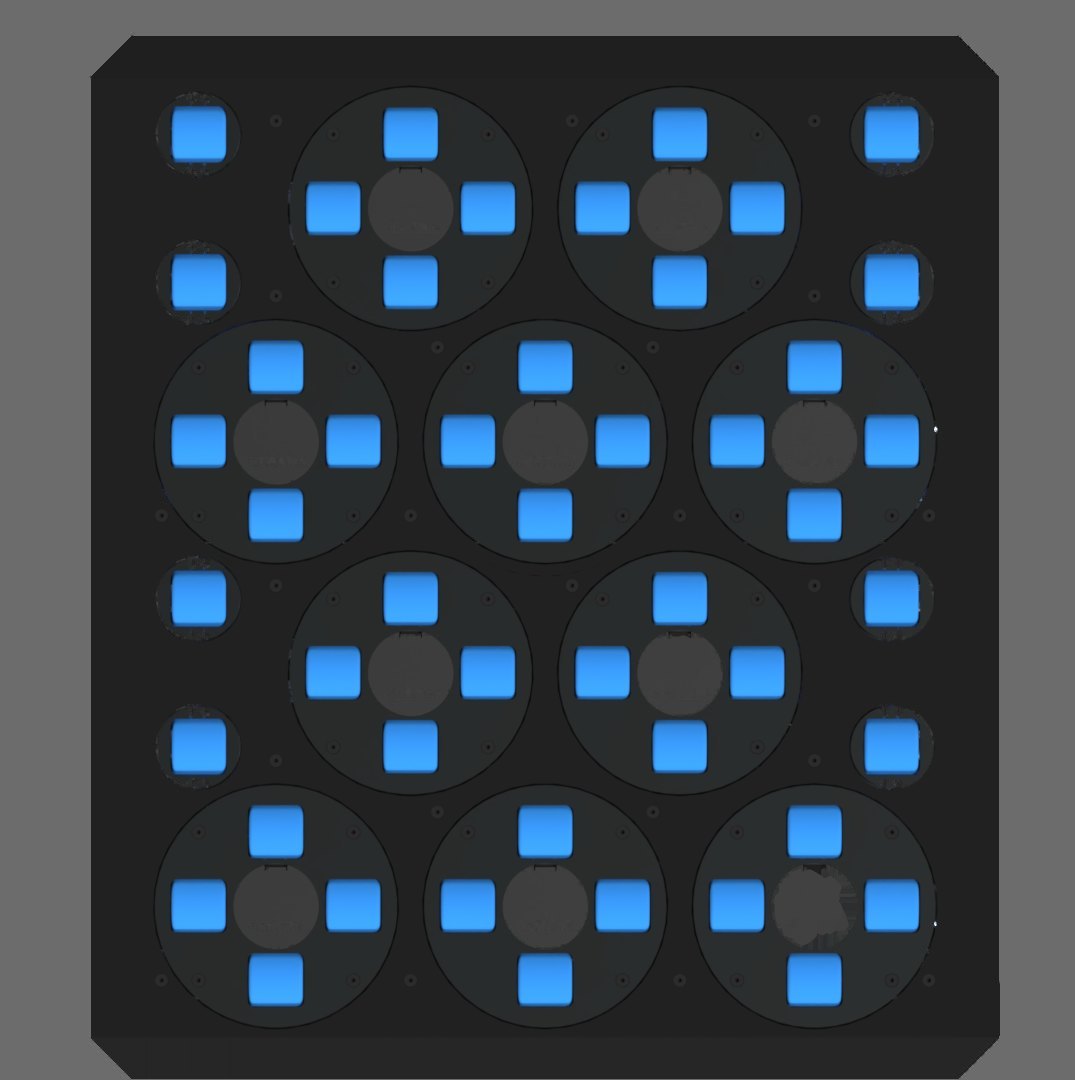
A pop-up wheel sorter is made of divert modules set into a conveyor line. The wheels in the module rise above the conveying surface, angle and turn the carton left or right onto a branch line or chute. Cartons that are not diverted pass straight through. Exon designs the line, installs the pop-up sorter and integrates it with its own control software.
A pop-up wheel sorter sorts flat-bottomed cartons and totes on a linear line. Typical jobs are store or route sorting in retail distribution centers, distribution to packing stations in e-commerce warehouses and reject outlets on a line. The divert module replaces a section of an existing roller or belt conveyor. A sort point can therefore be added without building a separate sorter line. The modules are driven by electric motors and run quietly. It works together with barcode reading, your warehouse management system (WMS) and Exon control software. Divert angle, number of outlets and throughput are set per project from the item mix and line layout.

At a glance
| Layout | Linear line; added to an existing conveyor as a module |
|---|---|
| Divert | Rising, angled wheels; left, right or straight through |
| Items | Flat-bottomed, rigid cartons and totes |
| Polybags and envelopes | Weak grip; narrow-belt or cross-belt recommended |
| Drive | Electric motor, quiet |
| Divert angle | Set per project and requirement |
| Software | Exon PLC and control software; integrated with your warehouse management system (WMS) |
| Throughput | Calculated per project from item length, gaps, line speed and number of outlets |
How does a pop-up wheel sorter work?
- Scanning: The barcode is read while the carton moves along the line. The destination comes from the warehouse management system (WMS) or Exon control software.
- Tracking: The control software follows the carton with sensors along the line and calculates when it reaches its divert module.
- Divert: As the carton enters the module, the wheels rise and angle. They grip the carton by its base and turn it left or right.
- Outlet: The carton passes onto a side conveyor, chute or station. The wheels drop and the next carton continues straight.
- Unsorted cartons: No-reads and missed diverts go to the reject outlet.
Which items does it suit, and which not?
The wheels grip the item by its base, so the base decides the result.
- Suitable: cartons, plastic totes and flat-bottomed, rigid packages; store or route sorting; distribution to packing stations; reject and inspection outlets.
- Not suitable or test needed: polybags, envelopes, soft or uneven-bottomed items; items too small or too long for the module size.
For polybag-heavy parcel flows, a narrow-belt or cross-belt sorter fits better.
Adding it to an existing line
A pop-up sorter does not need a separate sorter line. The divert module replaces a section of the existing conveyor. The project plans these together:
- which section is removed and where the modules go,
- side outlet lines, chutes and an accumulation area at each outlet,
- the barcode reading point and the reject outlet,
- Exon control software and the WMS connection.
In a running facility, installation is done in stages, keeping operations running wherever possible. Exon supplies the infeed and outlet lines with its own conveyors in the same project.
Pop-up, ball-belt, narrow-belt or cross-belt?
| Criterion | Pop-up wheel sorter | Ball-belt sorter | Narrow-belt sorter | Cross-belt sorter |
|---|---|---|---|---|
| Layout | Linear; module in the conveyor line | Linear, short line | Linear line | Mostly a closed loop |
| Divert | Rising, angled wheels | Balls inside the belt | Narrow-belt carriers turn sideways | Belt on each carrier discharges to either side |
| Items | Flat-bottomed cartons, totes | Flat-bottomed cartons, boxes, totes | Polybags, cartons, flat items | Wide range incl. polybags and fragile items |
| Polybags | Weak | By item testing | Suitable | Suitable |
| Adding to an existing line | Easy; as a module | Can be added as a module | Separate sorter line | Separate system |
| Throughput | Per project | Per project | Per project | Per project |
If your items are cartons and totes and the line is already a conveyor, the pop-up sorter stands out. In very tight spaces, the ball-belt sorter is considered. With many polybags, narrow-belt; with many outlets and a wide item range, cross-belt. All types: Sortation Systems.
Checklist before you choose
- Item mix: share of cartons, totes, polybags and envelopes; smallest and largest item, weight.
- Base condition: tape, label residue or bulges under the carton; wet or soft cardboard?
- Number and spacing of outlets: outlets needed today and later, reject outlet; is the distance between outlets enough for the carton length?
- Induction: do cartons arrive with even gaps? Uneven gaps cause missed diverts.
- Outlet clearing: what happens when a side line is full; are accumulation space and full-line sensors planned?
- Growth: if the polybag share grows, is there room to move to another sorter type?
What drives the price: What drives sorter and conveyor cost?
Project flow with Exon
- Needs review: item mix, peak-hour volume, number of outlets and the existing line.
- 3D layout before the quotation: modules, outlets and infeed are placed in the layout; the flow is simulated in Demo3D when needed. The price is based on this layout.
- Line design and installation: Exon designs the line, builds the infeed and outlet conveyors and installs them together with the pop-up modules.
- Integration: PLC and control software are Exon's own; barcode reading and the WMS connection are set up.
- Site testing and commissioning: the line is tested with real items and operators are trained.
- Service: 24/7 support and spare parts.
Sorter projects usually take 2–4 months, depending on scope.
Frequently asked questions
Which items can a pop-up wheel sorter handle? Can it sort polybags?
Can a pop-up sorter be added to my existing conveyor line?
What is the throughput of a pop-up wheel sorter?
What is the divert angle? Can it divert to both sides?
Pop-up, ball-belt or narrow-belt: which should I choose?
Does a pop-up sorter run quietly? How is it maintained?
How long does installation take, and what drives the price?
Related pages
Glossary: what is a pop-up wheel sorter? · sorter chute · sorter induction · sorter throughput